![Upgrade to Premium Weight [18-gauge steel]](http://titancasket.com/cdn/shop/products/casketthicknesswithnumbers.png?v=1680642906&width=533)

Introduction
Freddie Mercury died on 24 November 1991 at his home in Kensington, west London. He was 45. The day before, he had released a short statement confirming what the newspapers had been circling for weeks. "Following the enormous conjecture in the press over the last two weeks," it read, "I wish to confirm that I have been tested HIV positive and have AIDS." His representatives gave the cause of death as bronchial pneumonia resulting from AIDS.
Three days later, around 35 people gathered in a chapel in west London for a service that lasted 25 minutes and was conducted largely in a language most of them did not speak. There was a single red rose on his coffin. This is what has been confirmed about that morning, and what has never been made public.
The Life and Legacy of Freddie Mercury
He was born Farrokh Bulsara on 5 September 1946 in Zanzibar, to Parsi parents whose family roots were in Gujarat, India. He was schooled in Panchgani, near Bombay, and the family settled in Feltham, west London, in 1964. He took a diploma in graphic art and design at Ealing Art College, and designed the Queen crest himself, weaving in the zodiac signs of all four members. Queen came together in 1970 with Brian May and Roger Taylor, and John Deacon joined the following year.
The catalogue speaks for itself. "Bohemian Rhapsody" broke every rule about what a single could be. "Somebody To Love" put a gospel choir inside a rock record. "We Are The Champions" and "Don't Stop Me Now" have outlived nearly everyone who first heard them. Away from the band he recorded "Barcelona" with the soprano Montserrat Caballé in 1987, a collaboration that mattered enormously to him. Queen entered the Rock and Roll Hall of Fame in 2001, ten years after his death.
Let Titan Concierge help you plan with clarity, care, and confidence.
The News of Freddie Mercury's Passing
He died on the evening of 24 November 1991, roughly 24 hours after the statement went out. He had guarded his privacy for years and the statement asked that the policy continue. "My privacy has always been very special to me, and I am famous for my lack of interviews. Please understand this policy will continue."
Britain answered in the way it knew how. On 9 December 1991 "These Are The Days Of Our Lives" was reissued as a double A-side with "Bohemian Rhapsody". It went straight to number one and stayed there for five weeks, making the same song a Christmas number one for the second time, sixteen years after the first. The video for it was the last footage ever shot of him, filmed in black and white in May 1991 to soften how ill he looked.
The Funeral Arrangements for Freddie Mercury
The funeral was held on the morning of 27 November 1991 at the West London Crematorium at Kensal Green. It was private. Two Zoroastrian priests conducted the rites in Avestan, the ancient liturgical language of the faith he was born into, giving their instructions to stand and sit in English. The whole service ran to about 25 minutes. His parents, Bomi and Jer Bulsara, were there, along with the three other members of Queen, Elton John and Anita Dobson. Contemporary reports put the congregation at roughly 35 people.
His coffin was carried into the chapel to Aretha Franklin singing "Take My Hand, Precious Lord", followed by "You've Got a Friend". The service closed with a Verdi aria sung by Montserrat Caballé, his friend and collaborator. Outside, the floral tributes sent by fans filled five hearses. Afterwards they were taken to AIDS wards in London hospitals and given away.
The Casket Details of Freddie Mercury
One detail of the coffin is on the record and it is a small one. A single red rose was laid on top of it as it was carried in. Beyond that, no maker, model, timber, finish or interior has ever been made public. The service was closed, no photographs were released from inside the chapel, and more than thirty years on it seems fair to say it never will be.
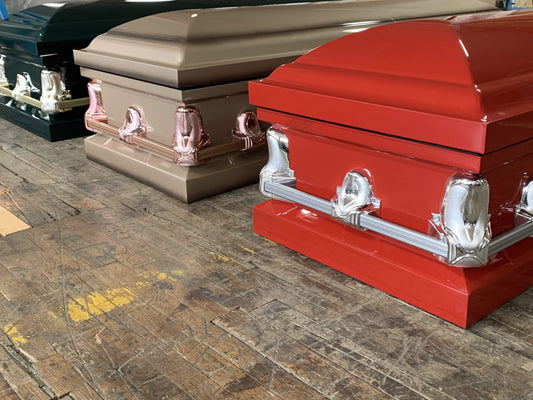
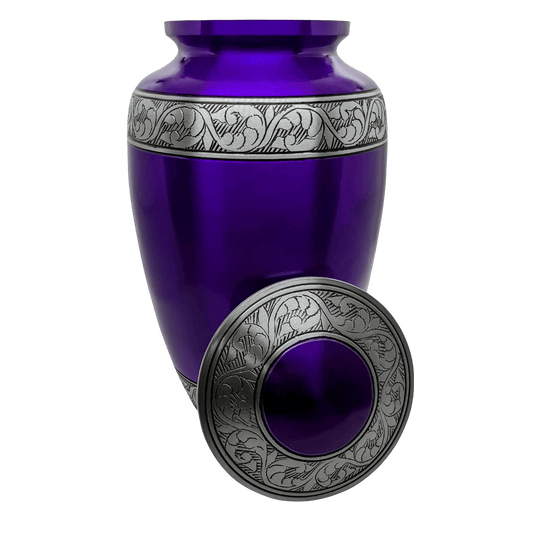
What is known is that he was cremated, which shapes the decision more than most people realise. A cremation service still needs a casket for the chapel, and families choosing one are usually weighing timber and simplicity rather than hardware and longevity. Our guide to different types of celebrity caskets sets out how those choices tend to get made, and you can see the range of cremation urns that follow one.
Attendees and Eulogies
No eulogy from the service has ever been published. The Zoroastrian rites carry their own prescribed prayers rather than the personal tributes an English funeral would expect, and the people in that chapel have largely kept the morning to themselves in the decades since.
The speeches came later and in public, which is probably how he would have wanted the balance. The private goodbye stayed private. The loud one filled a stadium five months afterwards.
The Impact on Fans and the Industry
The Freddie Mercury Tribute Concert for AIDS Awareness took place at Wembley Stadium on 20 April 1992. Around 72,000 people were in the stadium and an estimated one billion watched it broadcast across some 70 countries. Brian May, Roger Taylor and John Deacon played with a rotating cast that included David Bowie, Elton John, George Michael, Robert Plant, Annie Lennox and Liza Minnelli.
Its effect went well past the music. In 1991 an AIDS diagnosis was still something families hid, and the most famous man in British rock had spent four years hiding his. His death, and the concert that followed, moved the conversation in Britain further in six months than campaigners had managed in years.
Legacy and Remembering Freddie Mercury
The money raised by the concert founded the Mercury Phoenix Trust, set up by Brian May, Roger Taylor and Queen's manager Jim Beach. It has since given more than £17 million to close to 2,000 HIV and AIDS projects across 57 countries, most of it to small grassroots organisations rather than large agencies. His own catalogue continues at freddiemercury.com and the band's at queenonline.com.
The one thing nobody has is a place to visit. In line with his wishes, his ashes were given to Mary Austin, the woman he had once been engaged to and who he called the love of his life. She kept them for two years, then laid them somewhere she has never named and has said she never will. He also left her his house. "You would have been my wife," he told her, "and it would have been yours anyway."
-
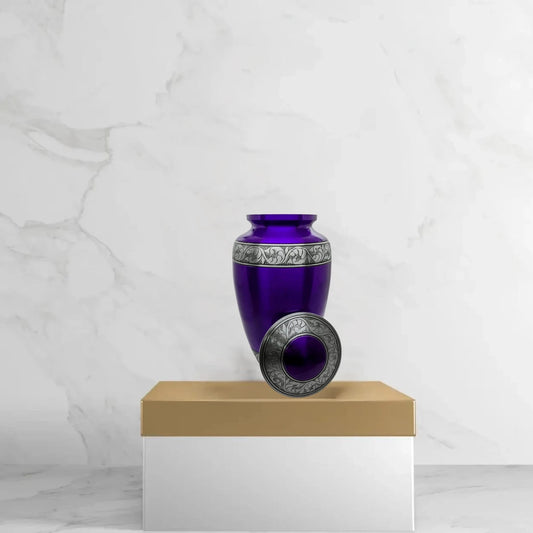
Cremation Urn - Purple
Regular price $119Regular priceUnit price per -
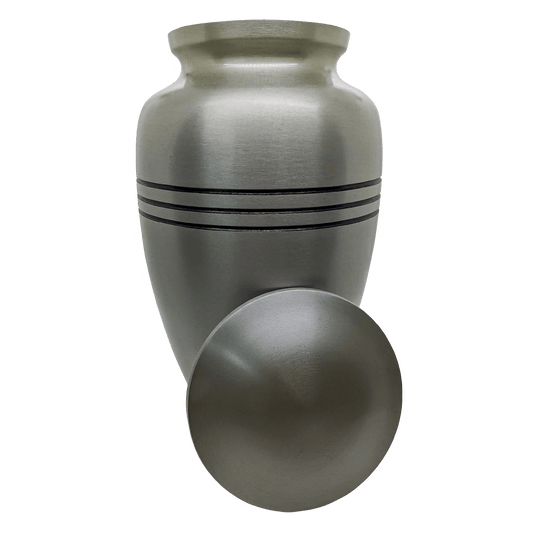
Cremation Urn - Silver (Pewter)
Regular price $119Regular priceUnit price per -
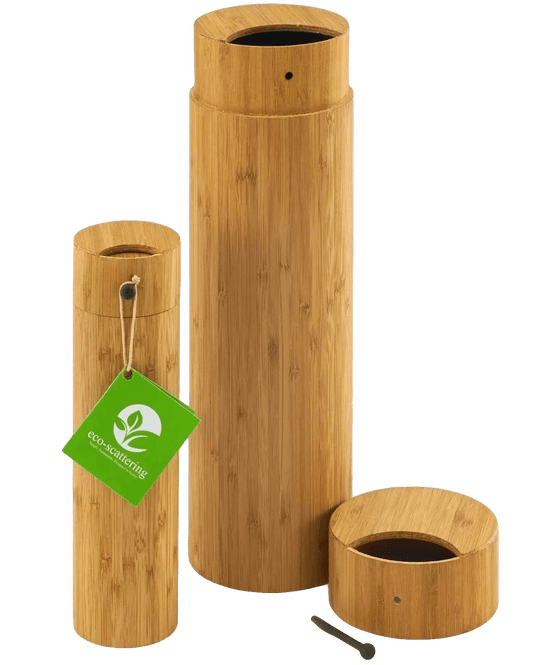
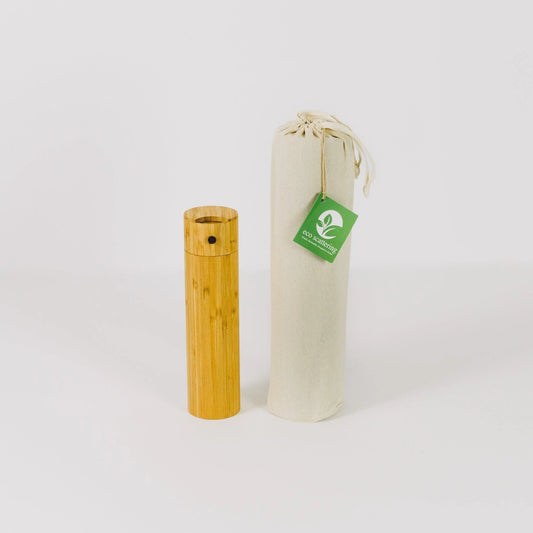
Eco Scattering Urn
Regular price From $59Regular priceUnit price per
Conclusion
What stands out about Freddie Mercury's death is not the secrecy. It is that every part of it was decided in advance, by him. The statement was his words. The Zoroastrian rites were his heritage and his choice. The one person entrusted with his ashes was named by him, and she has honoured it for more than thirty years without ever wavering.
That is the argument for writing things down. Families are usually asked to make these decisions in the worst week of their lives, with no idea what the person would have wanted. His did not have to guess. If you want to spare yours the same, our pages on pre-planning a casket and setting out your funeral wishes are the place to start. You can read more farewells in our celebrity caskets and funerals collection, including Amy Winehouse, Sinéad O'Connor, Michael Jackson and Elvis Presley.
Sources
- UPI, "Private funeral service held for Freddie Mercury", 27 November 1991
- Smithsonian Magazine, on Mercury's 23 November 1991 statement
- Official Charts Company, "Bohemian Rhapsody" chart history
- Rock and Roll Hall of Fame, Queen inductee page
- Mercury Phoenix Trust, About Us
- Best Classic Bands, "November 27, 1991: Freddie Mercury Dies"
- Wikipedia, Freddie Mercury and The Freddie Mercury Tribute Concert