

![Upgrade to Premium Weight [18-gauge steel]](http://titancasket.com/cdn/shop/products/casketthicknesswithnumbers.png?v=1680642906&width=533)
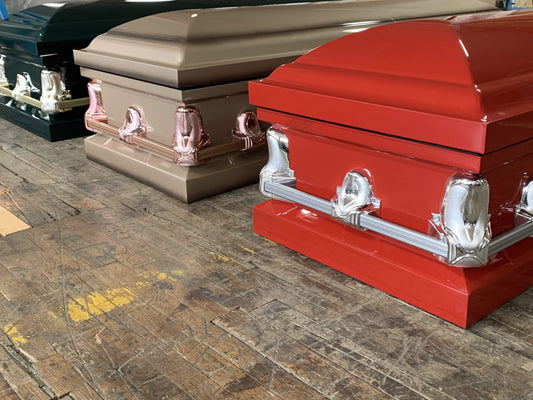

What's Difference between 18 and 20-Gauge Funeral Caskets?
As a team that works closely with families every day at Titan, we get asked one specific question more than almost anything else:
“What is the difference between an 18-gauge and a 20-gauge steel casket?”
Families see these terms online but naturally feel confused: What does gauge even mean? Why are there different numbers? Does the thickness change the strength? Does it affect cost? And what about gasketed caskets? what does that actually do?
This guide is our simple, honest explanation-written in the most easy-to-understand way: so you can make a confident decision for your loved one. Our goal is to clear all doubts around 18 gauge vs 20 gauge steel, because when families understand the basics, choosing becomes much less stressful.
Let’s begin.
What “Gauge” Means in Steel Caskets?
In the simplest terms:
-
Gauge - the thickness of the steel sheet used to make the casket.
-
Lower number - thicker steel.
-
Higher number - thinner steel.
So:
18-gauge steel
- thicker steel
- heavier
- stronger
- usually more expensive
20-gauge steel
- slightly thinner steel
- lighter
- cost-effective
- most commonly chosen
This is always consistent, whether you're looking at steel caskets, stainless steel products, or even sheet metal gauge charts.
Related Reading: The Complete Guide to Buying a Casket
18-Gauge Steel Caskets: What Makes Them Different?
Here’s what families usually love about 18-gauge:
1. They are thicker and stronger
18-gauge steel is approximately 15% thicker than 20-gauge.
So, when you choose 18-gauge, you’re choosing:
-
more durability
-
higher structural strength
-
a more premium feel
2. They tend to feel more substantial
Because the steel is thicker, 18-gauge caskets typically feel:
-
heavier
-
more solid
-
sturdier when touched
3. Often chosen for their premium look
At Titan, our 18-gauge caskets often include:
-
upgraded finishes
-
richer color tones
-
more refined hardware
Families looking for a long-lasting and beautifully crafted steel casket often lean toward 18-gauge.
20-Gauge Steel Caskets: What Makes Them a Great Choice?
We always say this very honestly: 20-gauge is our most popular option, not because it's “less than,” but because it strikes a perfect balance of quality and affordability.
1. A lighter and more economical option
The steel is slightly thinner, but still strong enough for any funeral service. It remains the industry standard for cost-effective steel caskets.
2. Extremely reliable
A lot of families assume thinner means weaker, but that’s not true in a practical sense.
A 20-gauge steel casket:
-
performs exactly as it should
-
is safe, dignified, and secure
-
meets all funeral home requirements
3. Great if you want something simple and beautiful
Our 20-gauge caskets still come in:
-
classic finishes
-
multiple color options
-
various interior fabrics
You don’t miss out on beauty or dignity.
So… Which Is Better? 18-Gauge or 20-Gauge?
This is the most common “People Also Ask” question:
“Which gauge is better-18 or 20?”
The honest and direct answer is:
- 18-gauge is thicker and stronger.
- 20-gauge is lighter and more budget-friendly.
Neither is “good or bad.” They serve different purposes.
Choose 18-gauge if:
-
You want premium strength
-
You prefer a thicker metal
-
You’re choosing a high-end or long-lasting product
Choose 20-gauge if:
-
You want an affordable steel option
-
You value simplicity and function
-
You want a beautiful casket at a lower cost
Both are safe. Both are dignified. Both are excellent choices—we simply help families choose what matches their needs.
Is 20-Gauge Thicker Than 18-Gauge?
No.
This is a trick question many people ask because the numbering feels reversed.
18-gauge steel is thicker than 20-gauge.
Think of gauge numbers like sizing in jewelry or needles, the higher the number, the thinner it is.
How Much Thicker Is 18-Gauge Than 20-Gauge?
Here’s a simple way to visualize it (not technical, just relatable):
It’s not double, but it is noticeably thicker.
This difference gives 18-gauge caskets:
-
more weight
-
more durability
-
a more premium feel
-
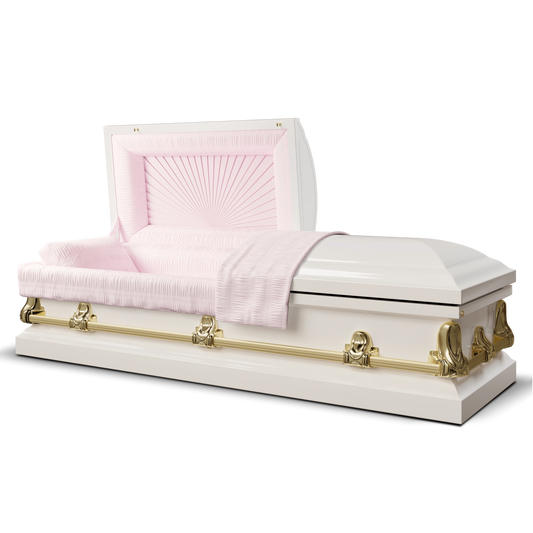
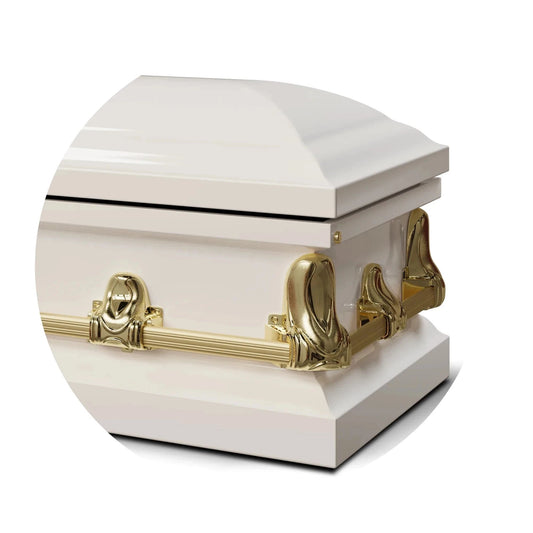
Taylor's Choice
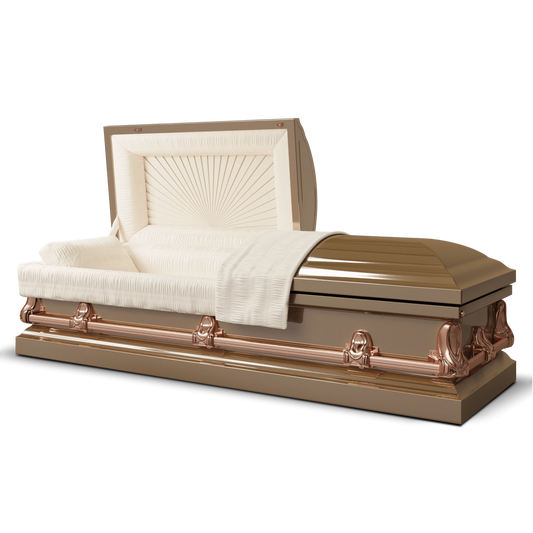
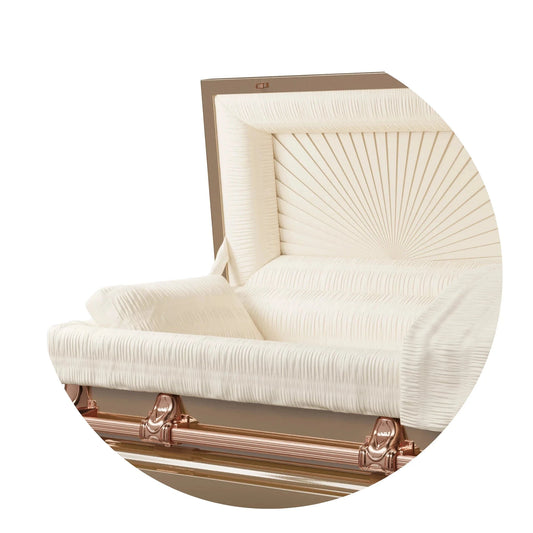
Orion Series (Made in USA)
Regular price $1,599Regular priceUnit price per -
Orion Series (Made in USA)
Regular price $1,599Regular priceUnit price per -
Orion Series (Made in USA)
Regular price $1,599Regular priceUnit price per

Does Gauge Affect Funeral Home Handling?
Yes, but only slightly.
-
18-gauge is heavier, which some families prefer
-
20-gauge is easier to carry, which funeral directors often appreciate
Both remain fully functional and appropriate for any type of service.
What Does “Gasketed” Mean in a Steel Casket?
This is another question that appears in “People Also Ask.”
A gasketed casket has a rubber seal installed around the lid.
When closed, the lid compresses this seal to create a tight, protective closure.
The purpose of a gasket is:
-
to reduce outside elements entering the casket
-
to create a secure interior environment
-
to provide families comfort and peace of mind
It is NOT meant to preserve the body forever—no casket can.
But it does add an extra layer of protection, which many families prefer.
Most steel caskets—both 18-gauge and 20-gauge—can be gasketed.
Do All 18-Gauge and 20-Gauge Caskets Come With a Gasket?
No, not always.
At Titan, we offer both:
-
Gasketed options
-
Non-gasketed options
This gives families freedom to choose based on budget and preference.
18-Gauge vs 20-Gauge: How Do They Compare in Real Life?
Here is the clearest comparison:
| Feature | 18-Gauge Steel | 20-Gauge Steel |
|---|---|---|
| Thickness | Thicker | Thinner |
| Strength | Higher | Standard |
| Weight | Heavier | Lighter |
| Cost | Higher | More affordable |
| Appearance | More premium | Classic & simple |
| Durability | Higher | Standard |
| Best for | Premium choice | Budget-friendly option |
Why Both Gauges Exist in the Funeral Industry
Families have different needs.
Some want:
-
thicker steel
-
a luxury feel
-
long-term durability
Others want:
-
affordability
-
practicality
-
a simple, dignified option
Both gauges allow funeral homes and families to choose something that fits them perfectly.
Is an 18-Gauge Casket Worth the Extra Cost?
If you’re looking for:
-
more durability
-
a more substantial build
-
higher-quality finishes
Then yes, many families feel it is worth it.
If you want something cost-effective but still strong and beautiful:
Then 20-gauge is a wonderful choice.
Is a 20-Gauge Steel Casket Good?
Absolutely.
A 20-gauge casket is:
-
safe
-
reliable
-
industry standard
-
commonly used across the U.S.
-
chosen by millions of families every year
The thinner steel does not reduce its dignity or function.
What Is the Best Gauge for a Casket?
There is no single “best” answer.
It depends entirely on what you value:
-
Best for strength: 18-gauge
-
Best for affordability: 20-gauge
-
Best for standard funerals: Both are equally appropriate
We always tell families:
Your choice should feel right emotionally and financially.
Both gauges offer beautiful options.
Let Titan Concierge help you plan with clarity, care, and confidence.
What Is Bigger-18 Gauge or 20 Gauge?
Another very common confusion.
The word “bigger” usually refers to thickness.
18-gauge is thicker (bigger)
20-gauge is thinner (smaller)
Our Personal Recommendation as a Team That Works With These Every Day
If you are choosing between 18 gauge vs 20 gauge steel, here is our honest advice:
-
If you want the heaviest, strongest, premium option - choose 18-gauge.
-
If you want a beautiful, dignified, budget-friendly option - choose 20-gauge.
Every family has different priorities.
And truly, both gauges offer respect, dignity, and quality.
Final Thoughts
We wrote this guide to make things simpler for families who are overwhelmed during a difficult time.
Understanding the basics of gauge thickness, steel strength, and gasketed closures can help you make a more confident and peaceful decision.
Whether you choose 18-gauge or 20-gauge steel, you are choosing a beautiful way to honor someone you love.
And at Titan, we are always here to help guide you through these decisions with clarity and care.