

![Upgrade to Premium Weight [18-gauge steel]](http://titancasket.com/cdn/shop/products/casketthicknesswithnumbers.png?v=1680642906&width=533)
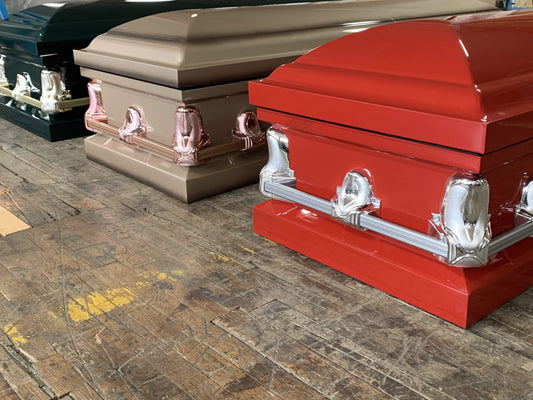

If your pet has just died, here is what to do first: confirm they have passed, call your veterinarian (or an emergency clinic if it is after hours), keep the body cool and wrapped, and decide within about 24 hours whether you want cremation, burial or veterinary aftercare. Everything else, from choosing an urn or pet casket to planning a small memorial, can wait until you have had a moment to breathe. This guide walks through what to do when a pet dies, step by step, including what to do with your pet's body at home, what each option costs, and how to say goodbye in a way that feels right for your family.
What to do when a pet dies: the first 24 hours
- Confirm your pet has passed. Check for breathing and a heartbeat for a full minute. If you are unsure, or if your pet is unresponsive but still breathing, call an emergency veterinary clinic straight away.
- Give yourself a few minutes. There is no rush in the first hour. Many families want to sit with their pet, let other household pets sniff and see them, and let children say goodbye. This is normal and healthy.
- Call your veterinarian. Most clinics will take your pet's body, arrange cremation through a partner crematory, and record the death on your pet's file. If your pet died at the clinic, staff will walk you through the same choices before you leave.
- Prepare and cool the body. If you are keeping your pet at home for more than a few hours, follow the steps in the next section. Warm rooms speed decomposition, so this matters even if you plan to bury the same day.
- Choose an option: cremation, burial or aftercare. Private cremation returns your pet's ashes to you. Communal cremation does not. Home burial is legal in most, but not all, US states and cities. Your vet or local animal services can also handle disposal if cost is a concern.
- Notify anyone who needs to know. Cancel pet insurance, food subscriptions, boarding or grooming bookings, and update the microchip registry so a found-tag scan does not trigger a distressing call later.
Classic Pet Casket
Sale price
From $329
Camouflage Pet Casket
Sale price
From $399
Classic Pet Casket
Sale price
From $329


What to do with your pet's body at home
This is the question people most often search for after a dog or cat dies at home, and it is rarely explained clearly. Rigor mortis usually sets in within three to four hours, so it helps to act early.
- Wear gloves if you have them. Bodily fluids can be released after death, so place your pet on a towel or absorbent pad first.
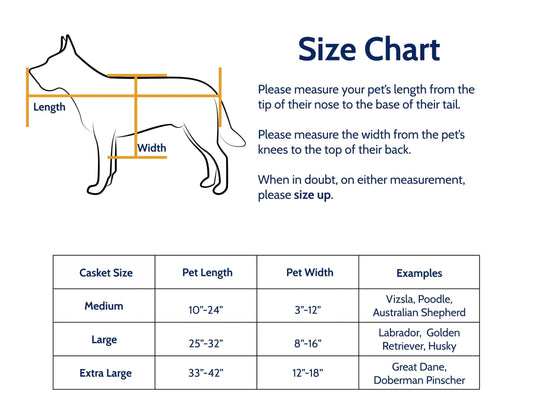
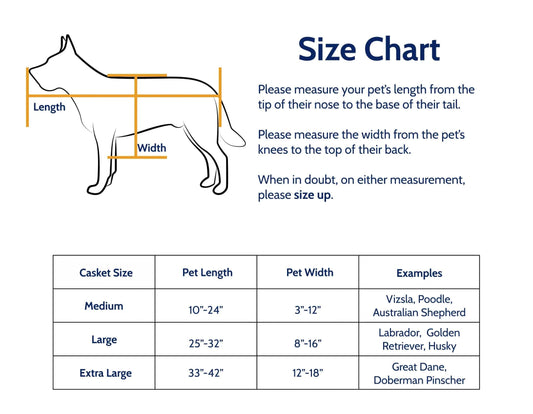
- Position your pet while the body is still supple: gently tuck the legs in and close the eyes if you wish. This makes a casket or carrier fit far more easily later.
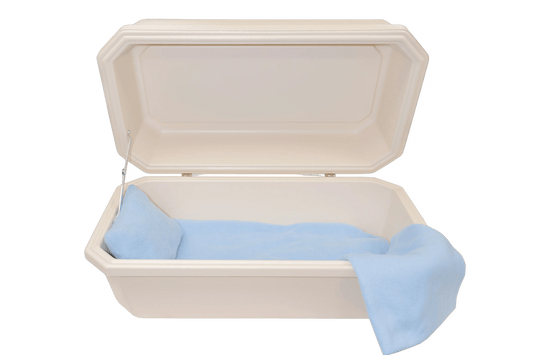
- Wrap the body in a towel or blanket, then place it in a heavy plastic bag or lined box. Titan's pet caskets are sealed for exactly this reason, but a lined cardboard box or a sturdy storage tub works for the short term.
- Keep the body cold. For a few hours, the coolest room in the house or a garage is fine. If it will be more than 24 hours before burial or cremation, a refrigerator or freezer is the safest choice; many families use a chest freezer or ask their vet to hold the body for a small fee.
- Keep other pets away once the body is wrapped. A brief goodbye before wrapping is fine and can help surviving animals settle.
If your pet was large and you cannot lift or transport them, call your veterinarian or a local pet crematory. Most offer home pickup, usually for an additional charge in the range of $50 to $150.
Cremation, burial, aquamation or disposal: what each costs
Prices vary by region and by your pet's weight, and the ranges below are typical rather than quoted figures, so treat them as a starting point when you call around. Crematories and pet cemeteries accredited by the International Association of Pet Cemeteries & Crematories (IAOPCC) follow published standards for handling and identification, which is worth asking about if you want your own pet's ashes back.
| Option | What happens | Typical cost (US) | Ashes returned? |
|---|---|---|---|
| Communal cremation | Your pet is cremated alongside other animals | $50 to $150 | No |
| Private (individual) cremation | Your pet is cremated alone | $150 to $400, more for large dogs | Yes |
| Aquamation (alkaline hydrolysis) | Water-based, lower-emission alternative to flame cremation | $150 to $500 | Yes |
| Home burial | You bury your pet on property you own, where local law allows | $0 plus casket or marker if wanted | Not applicable |
| Pet cemetery burial | Plot, opening and closing, optional casket and headstone | $500 to $2,000 and up | Not applicable |
| Veterinary or municipal disposal | Clinic or animal services handles the remains | Free to about $150 | No |
Veterinary clinics generally add a handling fee on top of the crematory's charge, so asking the crematory directly is sometimes cheaper. If you want ashes back, confirm in writing that you are paying for a private rather than a partitioned or communal cremation, since the terms are used loosely.
Where to bury a pet
At home. Home burial is the most common choice for people who own their land, and it is legal in most US states provided you follow local rules on depth, distance from water sources and property lines, and container type. Rules differ by state and even by county, and some cities prohibit backyard burial outright, so check our state and local pet burial laws guide before you dig. As a practical minimum, dig at least three feet deep, avoid spots near wells or streams, and call 811 first if you are unsure where utility lines run. If your pet was euthanized, ask your vet about the drugs used; pentobarbital residue can harm wildlife or other pets that dig, which is one reason a sealed casket is recommended for home burial.
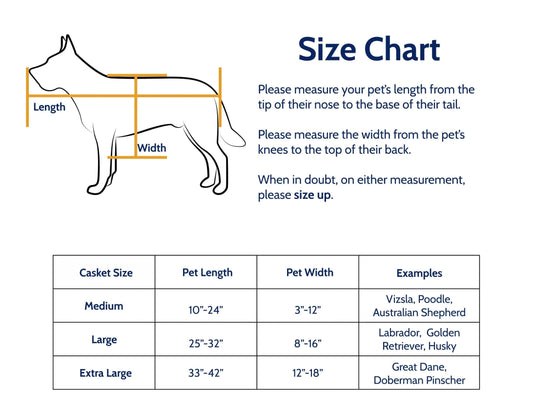
A casket is not required for home burial, but many families choose one to keep the grave intact and to give the burial a sense of ceremony. Titan's pet caskets start at $129 for a basic burial casket and run to about $1,500 for steel caskets made in the USA, in sizes to fit everything from a cat or small dog to a large breed. If you have chosen cremation instead, pet urns start under $60, and our guide on how deep to bury an urn covers the practicalities of burying ashes at home.
In a pet cemetery. Pet cemeteries give you a permanent place to visit that does not depend on staying in the same house. Ask whether the ground is deeded for perpetual pet use; cemeteries without that protection can be sold and redeveloped, which is the main risk compared with human cemeteries. IAOPCC membership is a useful signal here too.
Together with you. A growing number of states and cemeteries now allow pets and people to share a plot, either through "whole family" sections in traditional cemeteries or by permitting human cremated remains in pet cemeteries. If this matters to you, it is worth asking the cemetery you or your family already use, since policies are set locally and have loosened noticeably over the past decade.
If your pet dies at night, on a weekend or while you are away
Wrap and cool the body as described above, then call your regular clinic when it opens; most will hold the body for you at no charge or for a small fee until you decide. If you would rather not wait, 24-hour emergency veterinary hospitals and many pet crematories accept drop-offs and arrange pickups around the clock. If your pet died while boarding or with a sitter, ask them to keep the body refrigerated until you can make a decision rather than authorizing disposal on your behalf.
If you cannot afford cremation or burial
Nobody should feel ashamed of asking about low-cost options. Communal cremation through your vet is usually the least expensive service that still treats your pet with dignity. Many city and county animal services departments will collect a deceased pet from your home or accept one at the shelter for a small fee or free of charge; search your city name plus "deceased animal pickup" or call the non-emergency line. Some humane societies and veterinary schools also offer reduced-cost cremation. Home burial, where legal, costs nothing beyond your time.
Memorializing a pet
Pets are family, and it is natural to want to mark their passing. A memorial gives you something to do with grief in the first days and a way to include children and friends who loved your pet too. Some ideas families find meaningful:
- Write a short obituary or tribute. A photo, when your pet joined the family, and a few of their quirks is plenty. Posting it also invites friends to share photos and memories you may never have seen. Our obituary template adapts easily for a pet.
- Hold a small gathering. A walk along your pet's favorite trail, a few words at the graveside, or a reading; our collection of poems and prayers for pet funerals and quotes for when a dog dies can help if you are stuck for words.
- Create a physical reminder. Plant a tree or shrub over the grave or in a favorite sunny spot, frame a photo with the collar, or have a paw print or nose print cast; many vets and crematories offer clay prints for a small fee if you ask before cremation.
Plan Your Farewell with Grace – Our Pre-Planned Caskets Offer Peace of Mind
- Give in your pet's name. A donation to a local shelter, a rescue for your pet's breed, or research into the illness your pet had turns grief into something useful. Dropping off unopened food and toys at a shelter is a practical version of the same idea.
- Keep a scrapbook or album. Gather photos, vet records, the adoption paperwork and a lock of fur in one place. Digital photo-book services make this easy if you prefer a printed book.
- When you are ready, consider adopting again. No animal replaces the one you lost, and there is no right timeline. Some families adopt within weeks; others wait years. Giving a home to an animal in need is one of the most fitting tributes there is.
Coping with the loss of a pet
Grief after a pet's death is real grief, and it often catches people off guard, especially if others around them do not understand. The American Veterinary Medical Association's pet loss resources list pet-loss support hotlines, many of them run by veterinary schools and staffed by trained volunteers, and your vet can usually point you to a local support group. If you have children, be honest and use plain words; "died" is kinder in the long run than "went to sleep," which can frighten children at bedtime. If your grief starts to affect sleep, appetite or work for more than a few weeks, talking to a counselor is a reasonable step, not an overreaction.
Frequently asked questions
What do you do with a dead pet at home?
Wear gloves, place your pet on a towel, gently tuck the legs in, wrap the body in a blanket and then a plastic bag or lined box, and keep it in the coldest place available. Call your vet during opening hours to arrange cremation or aftercare, or bury your pet on your own property if local law allows.
How long can you keep a dead pet at home?
At normal room temperature, aim to bury or hand over the body within 24 hours. In a refrigerator, a few days is generally fine; in a freezer, considerably longer. Decomposition begins within hours in a warm room, so cooling the body is the single most important step.
Can I bury my dog or cat in my backyard?
In most US states, yes, if you own the property and follow local rules on depth and distance from water. Some cities and a few states prohibit it, and rented property requires the landlord's permission. Our state-by-state pet burial laws guide has the details for your area.
What happens to pets when they die at the vet?
The clinic will ask whether you want the body returned to you, a private cremation with ashes returned, or a communal cremation or disposal arranged by the clinic. You can take a little time to decide, and you can usually change your mind within a day or so if the body has not yet been collected.
Does it cost money to have a vet take a dead pet?
Usually there is a fee, most often between $50 and $150 for communal cremation or disposal, and more for a private cremation with ashes returned. If cost is a barrier, ask about communal cremation or contact your city's animal services department, which may collect deceased pets for free.