

![Upgrade to Premium Weight [18-gauge steel]](http://titancasket.com/cdn/shop/products/casketthicknesswithnumbers.png?v=1680642906&width=533)

To get a death certificate in the United States, the death is first registered with the state or county vital records office, usually by the funeral home, within about 3 to 10 days. Once it is registered, certified copies can be ordered from the county clerk, the state vital records office, or an approved online service. Most families receive their first certified copies within 1 to 4 weeks, at a cost of roughly $5 to $34 per copy depending on the state, and most estates need 10 to 12 copies.
The rest of this guide walks through each step: who files the certificate, how long it takes, how many copies you need, what they cost, who is allowed to order one, and how to get a copy later. Sorting out paperwork is one of the hardest parts of the first week after a loss. If you would rather have someone walk you through it, Titan Concierge provides free funeral planning support alongside the guide below.
How Do I Get a Death Certificate?
Getting a death certificate happens in two stages. First, the death has to be registered: a doctor, medical examiner or coroner certifies the cause of death, and the person handling the body (almost always the funeral home or cremation provider) files the completed record with the local or state registrar. Every state sets its own deadline for this, usually between 3 and 10 days after the death. California requires filing within 8 calendar days and before burial or cremation, Washington within 3 business days, and South Carolina within 5 days.
Second, once the record is on file, the vital records office can issue certified copies bearing the registrar's seal. These certified copies are what banks, insurers, the Social Security Administration and probate courts will ask you for. The funeral home will normally order your first batch as part of their arrangements and add the state fee to your bill; you can also order directly from the county or state at any time.
-
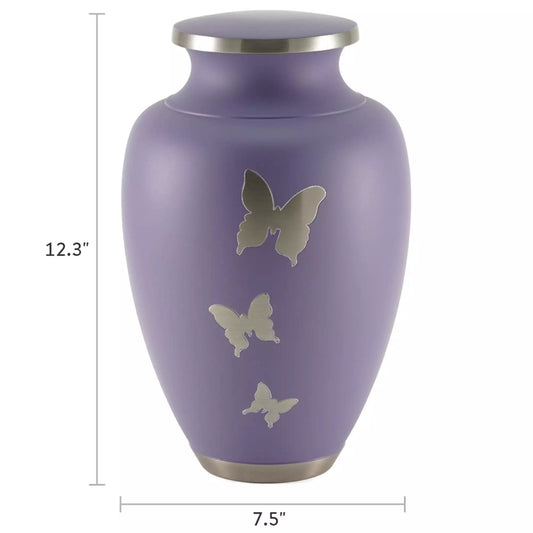
Aria Butterfly Extra Large Adult Urn
Regular price $489Regular priceUnit price per -
Atlas XL (Made in USA)
Regular price From $1,999Regular priceUnit price per



Who Prepares and Files the Death Certificate?
The funeral director or cremation provider you hire usually prepares and files the certificate, and the work is included in their fee. They will ask the family for the personal details the state requires, so it helps to have these ready:
- Full legal name, date of birth and Social Security number
- Home address and marital status, plus the surviving spouse's name
- Parents' full names, including the mother's maiden name
- Highest level of education and usual occupation
- Veteran status and discharge or claim number, if applicable
- Date, time and place of death (the certifying physician or medical examiner supplies the cause of death)
Accuracy matters here. Fixing a misspelled name or wrong date after the certificate is registered means filing an amendment with the state, which can take weeks and hold up insurance and estate claims. Read the draft carefully before the funeral home submits it. If you are working through everything that has to happen in the first days, our what to do when someone dies checklist puts the death certificate in context with the other early tasks.
How Long Does It Take to Get a Death Certificate?
Most families receive certified copies within 1 to 4 weeks of the death. The registration itself usually takes a few days once the physician signs, and counties then issue copies within roughly 5 to 15 business days. Florida and Illinois are typically at the fast end at about a week; California commonly takes 7 to 14 business days; Texas standard processing can run 20 to 25 days.
Two things slow the process down. If the death is under medical examiner or coroner review, the cause of death may be listed as "pending" and the final certificate can take 6 weeks or longer, although a pending certificate is often enough to begin funeral arrangements and some claims. And if you order by mail from the state office rather than through the funeral home or county, expect the longer end of the range. Expedited processing is available in most states for an extra fee.
How Many Death Certificates Do I Need?
Order 10 to 12 certified copies at the outset. Many organizations keep the copy you send them, and ordering in one batch is cheaper than going back later. You will typically need a certified copy for each of the following:
- Life insurance and annuity claims (one per policy)
- Social Security survivor benefits and any pension or retirement plan
- Veterans benefits, including burial in a national cemetery (see our guide to what to do when a veteran dies)
- Each bank, brokerage or credit card account
- Real estate, vehicle titles and transfer-on-death deeds
- The probate court, if the estate goes through probate
- Mortgage lender, landlord, utilities and cell phone carrier
- Employer HR and any union or professional association
Some institutions accept a photocopy or will return the original after review, so ask before sending a certified copy where a scan would do.
How Much Does a Death Certificate Cost?
A certified copy costs between about $5 and $34 depending on the state, and most states charge $10 to $25. Many use tiered pricing, with the first copy at the full fee and additional copies ordered at the same time at a lower rate. As of January 2026, California charges $26 per copy; Florida charges $5 for the first copy and $4 for each additional copy through the state office, though county offices there may charge more. Online orders usually add a processing fee of a few dollars plus shipping. The current fee is always posted on your state vital records website.
The funeral home passes the state fee through at cost, so there is no saving in ordering the first batch yourself; the difference is convenience. When you compare funeral home quotes, check whether the death certificate copies are itemized so you are not double-counting them. Our guide to funeral costs covers where the rest of the bill goes.
Who Can Get a Copy of a Death Certificate?
Certified copies, the kind with the registrar's seal that can be used for legal and financial claims, are restricted in most states to people with a direct interest: the spouse or domestic partner, parents, children, siblings, grandparents and grandchildren, the executor or administrator of the estate, and attorneys or agencies acting for them. You will normally be asked to state your relationship and show ID.
Informational copies, which are stamped as not valid for legal purposes, are available to anyone in many states and are used for genealogy and personal records. A few states, including New York, do not issue informational copies at all and apply the same restrictions to every request, so check your state's rules before ordering.
Plan Your Farewell with Grace – Our Pre-Planned Caskets Offer Peace of Mind
How Do I Get a Copy of a Death Certificate Later or Online?
You can order additional copies at any point, whether a month or decades after the death. There are three routes:
- County clerk or recorder in the county where the death occurred. This is usually the fastest option for recent deaths and often allows walk-in service.
- State vital records office. Every state keeps a permanent file. The CDC's Where to Write for Vital Records directory lists the office, fee and mailing address for each state and territory.
- Online. Most states accept orders through their own portal or through VitalChek, the vendor many state and county offices use for online orders. You will upload ID and pay the state fee plus a processing charge. Be wary of unofficial sites that charge large markups for the same service.
For an older death you will need the full name, the date and place of death, and your relationship to the person. If you are not sure of the exact date, most offices will search a range of years for an additional fee.
How Can I Get a Death Certificate for a Home Funeral or DIY Service?
Every state allows families to care for a body at home and hold a family-directed funeral. What varies is whether a family member may act as the person who files the death certificate. Most states allow it, but some, including Connecticut, Illinois, Indiana, Michigan, Nebraska, New Jersey and New York, require a licensed funeral director to file the certificate and in several cases to supervise the burial or cremation. The National Home Funeral Alliance maintains a state-by-state summary of these rules, and the Funeral Consumers Alliance is another reliable source.
If your state allows a family member to file, contact the local registrar or vital records office as soon as possible after the death to get the form or access to the electronic system, and ask what the filing deadline is and whether a burial or cremation permit is issued separately. The certifying physician still has to complete the medical portion, usually within 24 to 72 hours depending on the state. Do not proceed with burial or cremation until the registrar confirms the certificate is accepted and any permit is in hand. A funeral concierge can help you confirm your state's requirements before you commit to a home funeral.
What to Do Once You Have the Death Certificate
With certified copies in hand, notify the Social Security Administration first if the funeral home has not already done so (most do; you can confirm at 1-800-772-1213), because benefits paid after the month of death must be returned. Then work through insurers, banks, pensions and the estate. Our end of life checklist and the guide to what happens to debt when you die cover the financial steps in order.
Deadlines, fees and eligibility rules differ between states and change from year to year, so treat the figures above as a guide and confirm with your county or state vital records office. If you are also arranging the service, Titan Casket's how to plan a funeral guide covers the decisions that come next, and Titan Concierge's funeral planning services are free to any family that needs a hand.