

![Upgrade to Premium Weight [18-gauge steel]](http://titancasket.com/cdn/shop/products/casketthicknesswithnumbers.png?v=1680642906&width=533)
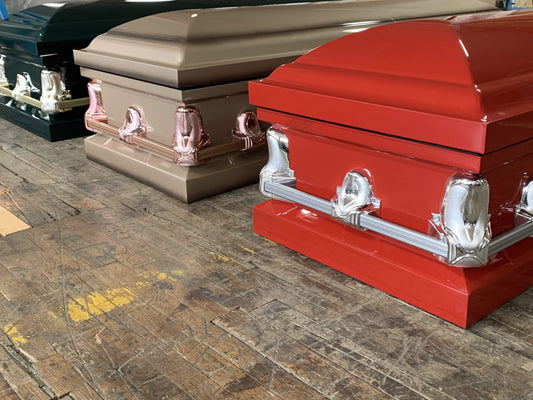
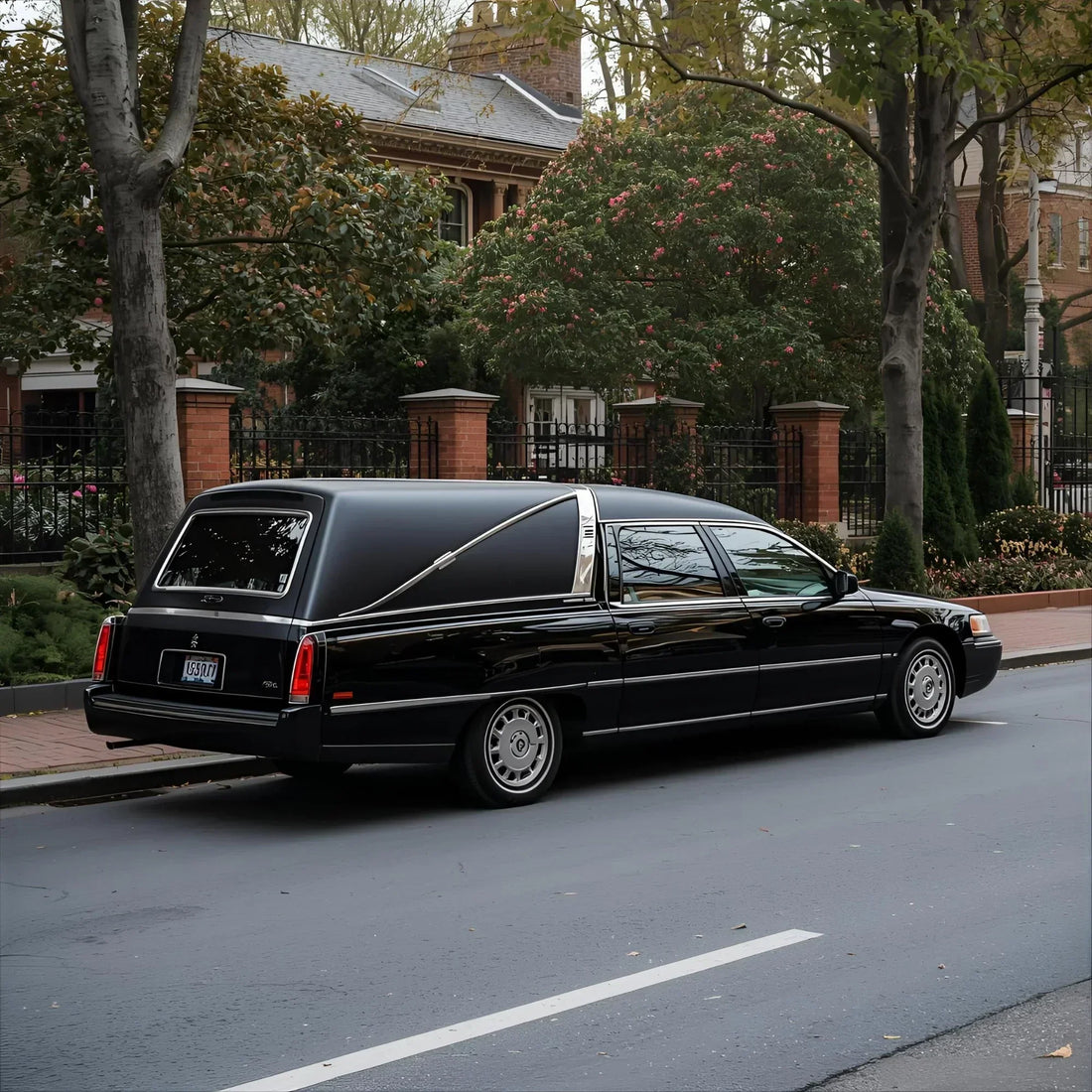
A hearse is a specialized vehicle used to transport a casket or coffin to a funeral service, burial, or cremation site. If you’re planning a funeral, you may come across the word hearse and wonder what it really means. Unlike a normal car, it is purpose-built to honor tradition while providing the space and dignity required for transporting the deceased. In almost all cases, the funeral home provides one as part of its services, so families rarely need to arrange it separately. Below: what a hearse is, the types, what it costs, and the traditions around it, including a look at coffins and caskets it carries.
What Is a Hearse?
A hearse, sometimes called a funeral car or casket car, is a vehicle designed to carry a coffin. It is built longer than a regular car and includes a large, flat area inside that secures the casket. Many hearses also feature curtain-covered windows and rollers that help smoothly guide the casket in and out of the vehicle.
While modern hearses are usually based on luxury sedans or limousines, the meaning has remained consistent: a hearse is a symbol of dignity and respect during the final journey of a loved one.
Why Do They Call It a Hearse?
The word hearse comes from the Latin word herpex, meaning harrow (a farming tool with spikes). In medieval times, the term evolved into herce in Old French and was used to describe a frame that held candles above a coffin. Eventually, the word was applied to the vehicles that carried the coffin itself.
History of the Hearse
The first funeral hearses were simple, horse-drawn carriages. In Europe and America, these carriages were ornately designed, often with glass sides and decorative drapes.

Image: Scottsdale Funeral Museum
By the early 20th century, motorized hearses replaced horse-drawn versions. They were typically constructed from large vehicles like Cadillacs, Lincolns, or Buicks, modified to include a lengthened body for the casket. Today, manufacturers around the world build funeral hearses, from traditional limousine hearses to more modern adaptations like vans or SUVs.
Let Titan Concierge help you plan with clarity, care, and confidence.
Types of Hearses and Funeral Cars
Just as there are many types of cars, there are also different styles of hearses:
Traditional Limousine Hearse: Long, elegant vehicles often used in the United States and Europe.
Casket Van or Funeral Van: Practical and discreet, sometimes used by funeral homes for private transport.
Vintage Hearse: Antique or classic models, often chosen for families who want a traditional touch.
Motorcycle Hearse: A motorcycle pulling a sidecar or trailer designed to hold a casket. Popular for unique or personal funerals.
Horse-Drawn Hearse: Still seen in formal or cultural ceremonies, offering a historical sense of dignity.
For the full picture of options and prices, see our guide to the 7 main types of funeral transportation and their costs.
Hearse vs. Normal Car: Key Differences
At first glance, a hearse may look like an elongated car. But the design and purpose are very different:
Function: A normal car transports people, while a hearse transports a coffin.
Structure: A hearse has an extended wheelbase and flat deck to secure the casket.
Symbolism: Cars are everyday vehicles; hearses are tied to rituals, respect, and tradition.
Features: Hearses may include curtains, rollers, and interior lighting not found in standard vehicles.

Why Do Hearses Have Curtains?
Curtained or frosted windows serve two purposes: privacy and dignity. They shield the casket from public view during transport while still allowing the outline of the flowers or flag to be seen when the family wishes. In the United States, curtains are traditional; in some countries, hearses use fully glass sides so mourners can see the coffin and floral tributes during the procession.
Who Rides in the Hearse?
Only the funeral director or a licensed driver rides in the hearse with the casket. Immediate family travels behind it, either in a family limousine provided by the funeral home or in their own cars as part of the funeral procession. The pallbearers meet the hearse at the church or graveside to carry the casket.
Do People Still Use Hearses Today?
Yes. While some families choose alternative transportation, hearses remain standard in funeral traditions across the U.S. and the world. They represent formality, respect, and continuity with long-standing customs. Even in modern funerals, most funeral homes include a hearse as part of the arrangement.
-
Taylor's Choice
Orion Series (Made in USA)
Regular price $1,599Regular priceUnit price per -
Orion Series (Made in USA)
Regular price $1,599Regular priceUnit price per -
Orion Series (Made in USA)
Regular price $1,599Regular priceUnit price per



How Much Does a Hearse Cost to Buy or Rent?
Buying a Hearse: A new funeral hearse can cost between $50,000 to $80,000, depending on the make, model, and customization. Used hearses are available for significantly less.
Renting a Hearse: Most families don’t purchase a hearse; instead, they pay funeral homes for transportation services. On an itemized funeral bill this typically appears as a $300 to $500 line item, and it is often bundled into the funeral package.
“The hearse fee is one of the line items families rarely question. Ask your funeral director for the itemized price list, which the FTC Funeral Rule requires them to provide, and check whether transportation is already included before agreeing to any package.”
Titan Expert Team
Related Reading: Funeral Costs in the U.S.: Average Prices & 12 Smart Ways to Save
How to Arrange a Hearse for a Funeral
If you are organizing a funeral, you don’t need to buy a hearse. Funeral homes and directors typically provide one as part of their services. If you’re planning in advance, you can:
Ask your funeral director about the type of hearse included.
Consider whether you want a traditional limousine hearse, van, or something unique like a vintage or horse-drawn hearse.
Work with a funeral concierge service (like Titan Concierge) for guidance on planning, costs, and transportation choices.
Related Reading: List Of 10 Questions To Ask Your Funeral Director
FAQs About Hearses
Why do they call it a hearse?
The name comes from medieval times when “herce” referred to a frame that held candles above a coffin. Over time, it became the word for the funeral car itself.
Is a hearse a coffin?
No. A hearse is the vehicle that carries the coffin or casket.
Do people still use hearses?
Yes, they remain standard for funerals worldwide, though styles may differ by culture.
What is the difference between a hearse and a van?
A hearse is custom-built for caskets with rollers, curtains, and extended space. A van is a general-purpose vehicle without these modifications.
How much does it cost to rent a hearse for a funeral?
Hearse transportation typically costs $300 to $500 as a line item on a funeral bill, and many funeral packages include it. Families almost never rent a hearse directly.
Can you have a funeral without a hearse?
Yes. Some families use a funeral van, an SUV, or even their own vehicle where the law allows it. A hearse is a tradition, not a legal requirement, though most funeral homes include one by default.