
![Upgrade to Premium Weight [18-gauge steel]](http://titancasket.com/cdn/shop/products/casketthicknesswithnumbers.png?v=1680642906&width=533)
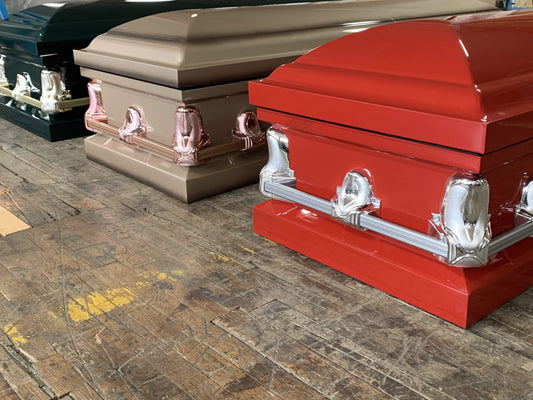
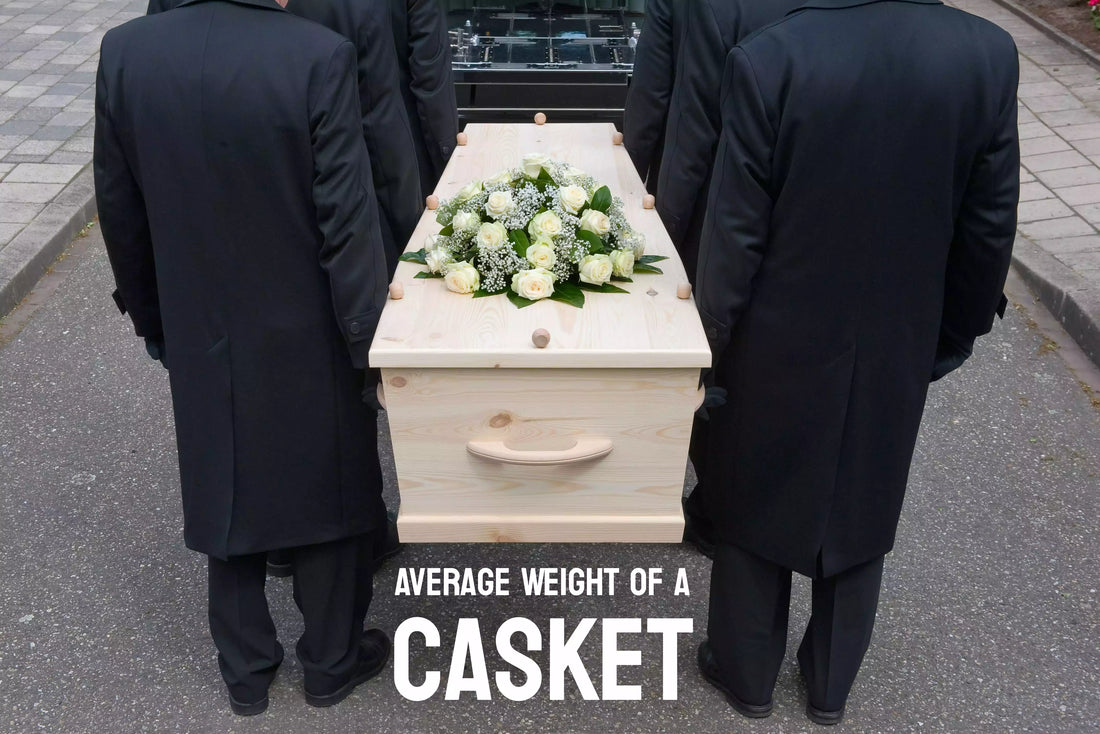
A standard adult casket weighs between 175 and 220 pounds when empty, with most models sitting close to 200 pounds. Once a body is inside, the total weight a pallbearer team carries is usually 350 to 400 pounds.
Those are the numbers most people are looking for. The full range is wider than that, though: a cardboard cremation container can weigh as little as 40 pounds, while a solid bronze casket in an oversize width can pass 400 pounds empty. What moves the number most is the material.
Average Casket Weight By Material
These figures are for empty caskets in standard adult size, which is roughly 84 inches long by 28 inches wide.
| Casket material | Average weight (empty) |
|---|---|
| Cardboard / cremation container | 40 - 80 lb |
| Plywood, fiberboard or cloth-covered | 100 - 150 lb |
| Pine | 120 - 150 lb |
| 20-gauge steel | 170 - 190 lb |
| Stainless steel | 175 - 200 lb |
| Poplar, maple or oak | 170 - 220 lb |
| 18-gauge steel | 200 - 230 lb |
| Mahogany, walnut or cherry | 200 - 250 lb |
| Copper or bronze | 250 - 400 lb |
| Oversize (any material) | Add 30 - 75 lb |
Weights vary between manufacturers, and a specific model can sit outside these ranges depending on its hardware and interior. If you need an exact figure for a particular casket, ask the seller for the shipping weight, which is the number funeral homes and cemeteries work from.
How Much Does A Wooden Casket Weigh?
A wooden casket typically weighs between 120 and 250 pounds, and the species of wood decides where in that range it lands. A pine box is among the lightest at roughly 120 to 150 pounds. Mahogany, walnut and cherry are the heaviest hardwoods in common use and can reach 250 pounds. Poplar, maple and oak sit in the middle.
Wood is chosen for its appearance and its solidity rather than its weight. Because timber has to be cut thick enough to hold its shape and carry hardware, a hardwood casket is often heavier than a steel one of the same size, which surprises most people.
Atlas XL (Made in USA)
Sale price
From $1,999
Orion Series (Made in USA)
Sale price
$1,599
Artisan (Poplar) (Made in USA)
Sale price
$1,999


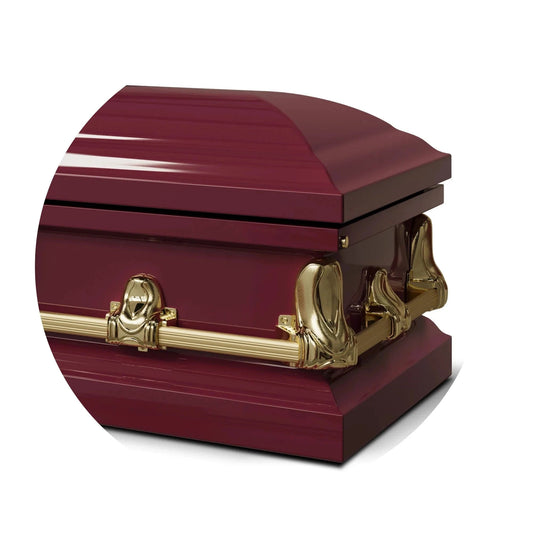
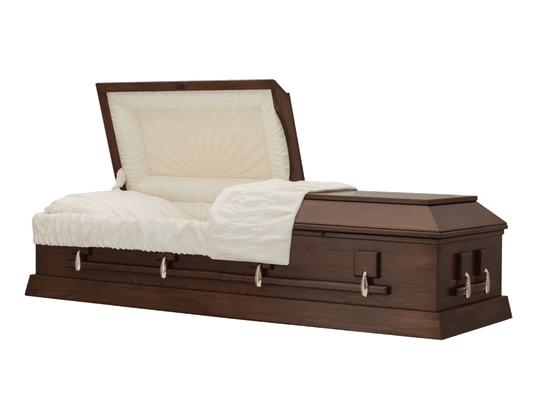
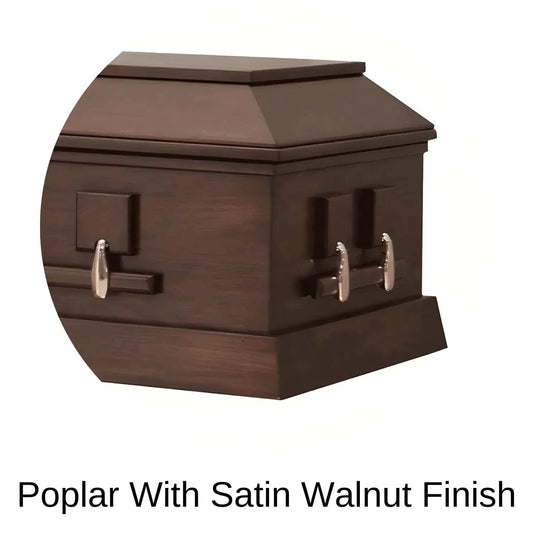
How Much Does A Metal Casket Weigh?
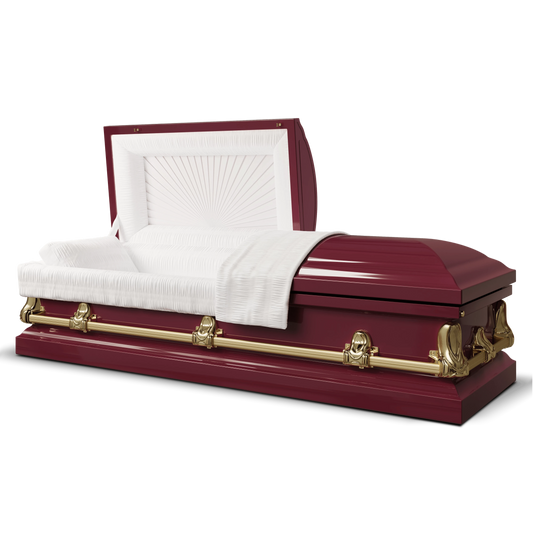
A metal casket usually weighs between 170 and 230 pounds. It is reasonable to assume metal would be heavier than wood, but that is not generally how it works out. Steel is strong enough to hold its shape at a fraction of the thickness timber needs, so a steel casket can be built with much thinner walls and still be more rigid than a hardwood one.
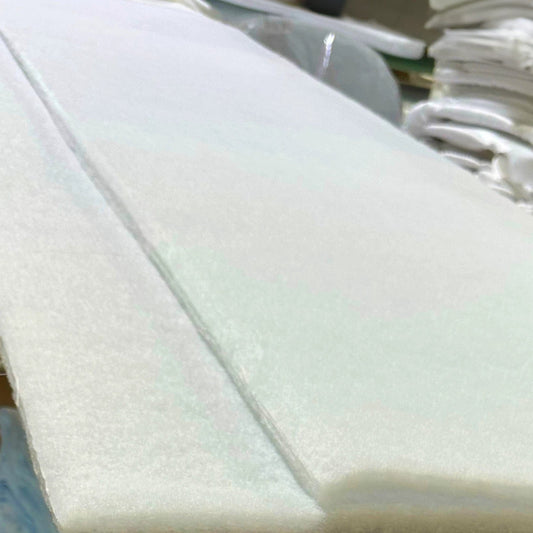
Gauge is the measure that matters, and it runs backwards: the lower the number, the thicker the steel. A 20-gauge casket weighs roughly 170 to 190 pounds. An 18-gauge casket, being thicker, runs 200 to 230 pounds. Stainless steel is comparable to 20-gauge at 175 to 200 pounds.
Copper and bronze are the outliers. Both are far denser than steel and are sold by the ounce-per-square-foot rather than by gauge, which puts them between 250 and 400 pounds. Gold-finished caskets follow the weight of whatever metal sits underneath the finish.
Plywood, Fiberboard And Cardboard Caskets
For an economical option that still looks the part, plywood and fiberboard caskets weigh 100 to 150 pounds. They are lighter than solid wood and are usually finished with a hardwood veneer or covered with fabric so they present much like a solid timber casket.
Sturdy cardboard caskets are the lightest option at 40 to 80 pounds. They are biodegradable, frequently made from recycled material, and combustible, which makes them a common choice for cremation. Being light does not mean being flimsy: reputable manufacturers build them to carry the same load as any other container.
How Much Does A Casket Weigh With A Body In It?
A casket with a body inside typically weighs 350 to 400 pounds. The calculation is simply the weight of the casket plus the weight of the person, so a 200-pound casket carrying a 180-pound adult comes to about 380 pounds.
The realistic full range is 250 to 500 pounds. A light cremation container holding a small adult can come in under 250 pounds; a bronze oversize casket carrying a large adult can exceed 500. This is the figure that matters on the day, because it is what the pallbearers are actually lifting.
Why Are Caskets So Heavy?
Three things account for most of the weight, and none of them is the body.
The first is structural. A casket has to stay rigid while being lifted at six or eight points along its length, lowered on straps, and in many cases stacked inside a burial vault. That requires far more material than a box of its size would otherwise need.
The second is hardware. Handles, rails, hinges, clasps and the adjustable bed inside are frequently solid brass or steel, and on a well-appointed casket the hardware alone can account for 30 to 50 pounds.
The third is sealing. Gasketed caskets carry a heavy rubber gasket and a locking mechanism around the full perimeter of the lid. It adds weight without adding any visible bulk, which is why two caskets that look identical can differ by 20 pounds.
What Else Adds To A Casket's Weight?
- Size. Oversized caskets are built wider and sometimes longer to accommodate taller or heavier people, and the extra material adds 30 to 75 pounds over a standard model.
- Hardware and decorative elements. Hinges, clasps, rods and handles are often brass or solid metal. Decorative interior panels and corner pieces add more.
- Interior materials. The fabric lining itself is rarely heavy enough to matter, but the mattress and adjustable bed frame beneath it are, and a thick rubber gasket adds several pounds on its own.
- Personal items. Keepsakes and belongings placed inside add their own weight, which is worth mentioning to the funeral director if the items are substantial.
Why Casket Weight Matters When You're Planning
Weight is not usually the deciding factor in choosing a casket, but it affects three practical decisions.
Pallbearers. A team of six carrying a 380-pound casket is handling about 63 pounds each, and eight pallbearers brings that down to roughly 48 pounds each. If the casket is a heavy hardwood or bronze model, or the person was large, ask for eight rather than six and choose people who can comfortably manage that load over uneven ground.
Cemetery and vault requirements. Some cemeteries set limits on the combined weight their lowering equipment will take, and an oversize casket may need a larger grave liner or vault. Confirm this with the cemetery before you buy rather than after.
Delivery. A casket shipping at 200-plus pounds arrives by freight, not parcel courier, and needs somewhere it can be received. If it is going to a funeral home, they will handle it as a matter of routine.
If you are working through these details for the first time, Titan Concierge provides free funeral planning guidance and can help you think through pallbearers, cemetery requirements and timing before anything is booked.
Plan Your Farewell with Grace – Our Pre-Planned Caskets Offer Peace of Mind
Requirements vary between cemeteries, funeral homes and jurisdictions, so treat the figures above as planning guidance and confirm specifics with your funeral director or cemetery.
Frequently Asked Questions
How much does the average casket weigh?
The average casket weighs about 200 pounds empty. Most standard adult caskets fall between 175 and 220 pounds, depending on whether they are built from steel, hardwood or a lighter engineered material.
How much does a coffin weigh?
A coffin weighs the same as a casket of equivalent material and size, typically 175 to 220 pounds. The difference between the two is shape rather than construction: a coffin is tapered, six-sided and wider at the shoulders, while a casket is rectangular.
How much does an empty casket weigh?
An empty standard adult casket weighs 175 to 220 pounds. Cardboard cremation containers start around 40 pounds, and copper or bronze caskets can reach 400 pounds empty.
How heavy is a casket with a body in it?
A casket with a body inside usually weighs 350 to 400 pounds in total, with a realistic range of 250 to 500 pounds depending on the casket material and the weight of the person.
Is a casket heavy to carry?
Shared between six pallbearers, a typical loaded casket works out to roughly 60 pounds each, and between eight it is closer to 48 pounds each. That is manageable for most adults over a short, level distance, but stairs, soft ground and long carries make a real difference. Funeral directors will normally recommend eight pallbearers for heavier caskets.
Why are caskets so heavy?
Caskets are built to stay rigid while being lifted at several points, lowered on straps and placed inside a burial vault. Solid brass or steel hardware can add 30 to 50 pounds, and gasketed models carry a heavy rubber seal around the lid.
Does casket weight affect the cost of a funeral?
Indirectly. Heavier caskets tend to use more expensive materials, and freight costs more for heavier items. The weight itself is not usually a separate line on a funeral home's price list. Comparing itemised prices across providers, or working with a funeral concierge, is a more reliable way to understand what you are being charged for.