

Introduction
Jackie Robinson died on the morning of 24 October 1972 at the age of 53. Nine days earlier he had thrown out the first pitch before Game 2 of the World Series, which the National Baseball Hall of Fame records as his last public appearance. Three days after he died, a church on the Upper West Side of Manhattan could not hold the people who came to say goodbye to him.
What followed was one of the largest farewells New York had given to an athlete. There was a public viewing, a service at Riverside Church, and a cortege that ran through Harlem and Bedford-Stuyvesant on its way to a cemetery in Brooklyn. The casket at the centre of all of it has never been described. No maker, no model, no wood and no finish has ever been put on the record.

The Life and Legacy of Jackie Robinson
Jack Roosevelt Robinson was born on 31 January 1919 in Cairo, Georgia. Congress set out the shape of his career in Public Law 108-101: the Brooklyn Dodgers signed him in 1947 and he became the first Black player in Major League Baseball, he won the National League's Rookie of the Year award in that first season, he was voted the league's Most Valuable Player in 1949, and he was elected to the Baseball Hall of Fame in 1962.
The same findings record what he did after he stopped playing. He became a vice president of Chock Full O'Nuts in 1957 and went on to co-found the Freedom National Bank in Harlem. The National Park Service keeps its own account of his life, and the Society for American Baseball Research carries a full biography by Rick Swaine. He was 53 when he died, which is young for a man whose name had been in the newspapers for a quarter of a century.
Let Titan Concierge help you plan with clarity, care, and confidence.
The News of Jackie Robinson's Passing
He collapsed early in the morning at his home on Cascade Road in Stamford, Connecticut. Police called by his wife tried to revive him with oxygen and then took him to Stamford Hospital, where he was pronounced dead on arrival. The reports that ran that day gave a heart attack as the apparent cause. No doctor, coroner or family spokesman was named in them, and no official cause was ever released afterwards.
What is on the record is the long illness behind it. Writing for the Associated Press twenty-five years later, Hal Bock reported that Robinson had been diagnosed with diabetes in 1957, that he had suffered heart attacks in 1968 and in 1970, and that he had been losing his eyesight. President Richard Nixon issued a statement on his death the same day, saying the nation would miss him and that his example would go on inspiring people for years.
The Funeral Arrangements for Jackie Robinson
Nothing has ever surfaced to show that Robinson left instructions for his own funeral. His widow, Rachel Robinson, made the decisions. In an account of those days published by Sports Illustrated, drawn from Kostya Kennedy's book True: The Four Seasons of Jackie Robinson, she organised the days of public viewing, settled how the eulogy would be handled, chose the pallbearers herself and greeted mourners at the funeral home. Others have settled all of that in advance, as Elizabeth Taylor did in writing and as Luke Perry did by choosing how he wanted to be buried, and planning a casket ahead of time or setting out a funeral in advance is what spares a family those choices in a week like that one.
The service was held on 27 October 1972 at Riverside Church in Manhattan. The Jackie Robinson Foundation dates the graveside service in Brooklyn to the same day. The church seats close to 2,500 people and more than that pressed inside, with many more waiting along the streets and pavements around it. Rick Swaine's biography puts it simply: more than two thousand people packed Riverside Church.
The Casket Details of Jackie Robinson
The pallbearers were the one part of the casket that was recorded. Kennedy's account names them as Bill Russell, Don Newcombe, Jim Gilliam, Ralph Branca, Pee Wee Reese, Joe Black and Larry Doby, old teammates and peers chosen by Rachel Robinson, and it describes Russell breaking into tears when he was asked. They carried the casket out of the church and into the hearse that would take it across the city.
Beyond that, nothing. No casket maker, model, material, colour or interior has ever been made public, and none has turned up in the half century of writing about that day since. He was buried rather than cremated, in the family plot at Cypress Hills Cemetery in Brooklyn, less than ten miles from Ebbets Field. A casket becomes a matter of public record only when a family says something about it or when the service is open enough that people can see it for themselves, which is why some celebrity caskets are described down to the hardware and others never are. Rachel Robinson opened both the viewing and the service to the public, and even so the casket she chose went unrecorded, down to the basic question of whether it was an American casket or a coffin in shape.
Attendees and Eulogies
The church was dotted with great athletes and well known names, by Kennedy's description. Wyatt Tee Walker read from Corinthians. A sixty voice choir sang Lift Every Voice and Sing. The Reverend Jesse Jackson then preached a eulogy that ran about half an hour, opening on the idea that the day called for the tears of sorrow and the tears of joy together, and describing Robinson as a rock dropped in water, sending out rings of new possibility. The Jackie Robinson Foundation still carries those lines on its own site.
There was no shortage of public words elsewhere. The President's statement had gone out three days earlier. Aretha Franklin and Muhammad Ali were each given a large public farewell of the same kind, with the words said over them carried well beyond the room.
The Impact on Fans and the Industry
The crowd that mattered most that day was outside. The cortege left Riverside Church and went up through Harlem, across to Bedford-Stuyvesant and on to the cemetery, and Hal Bock wrote for the Associated Press that the route had been chosen through those neighbourhoods so that people could say a last goodbye. Rick Swaine's biography calls it a mile long procession with tens of thousands lining the streets.
Kennedy's account gives the police estimates from that afternoon: around 30,000 people along 125th Street, about 5,000 at the mouth of the Triboro Bridge and roughly 2,000 already waiting at the graveyard. Robinson had been a Brooklyn player and the route took him back through the boroughs that had claimed him. Pelé, Wilt Chamberlain and George Foreman were each mourned in public in the places that had made their names, which is the shape a sporting farewell tends to take.
Legacy and Remembering Jackie Robinson
The honours kept arriving long after the funeral. Rachel Robinson accepted a posthumous Presidential Medal of Freedom on his behalf at a White House ceremony on 26 March 1984, where the citation called him a good citizen, a great man and a true American champion. Public Law 108-101, approved on 29 October 2003, authorised a congressional gold medal for his family. On 15 April 1997, at Shea Stadium, Major League Baseball retired his number 42 across every club under Commissioner Bud Selig, and Jackie Robinson Day on 15 April grew out of that evening. The Jackie Robinson Museum opened to the public on 5 September 2022 on Varick Street in Manhattan, with Rachel Robinson, then 100 years old, cutting the ribbon from a wheelchair.
The grave itself is plainer than any of that. A large grey granite stone carries the family name and one line of his own: a life is not important except in the impact it has on other lives. Hal Bock reported for the Associated Press in 1997 that fans visited daily, and the Brooklyn Eagle found bats, a pile of baseballs and a pair of athletic shoes left beside the headstone twenty years after that. Steve Jobs and Audrey Hepburn were both buried under markers that give a visitor almost nothing to read, and Eddie Van Halen and Mary Tyler Moore have landmarks their admirers go to instead. Robinson's stone is the rare one that tells a visitor what the man thought a life was for.
-
Catima's Choice
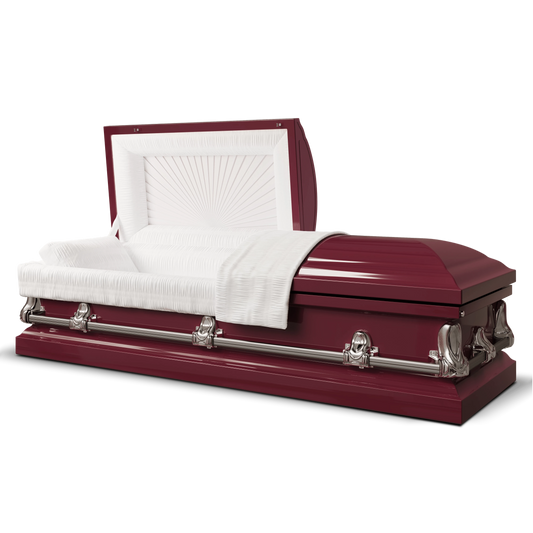
Orion Series (Made in USA)
Regular price $1,599Regular priceUnit price per -
Orion Series (Made in USA)
Regular price $1,599Regular priceUnit price per -
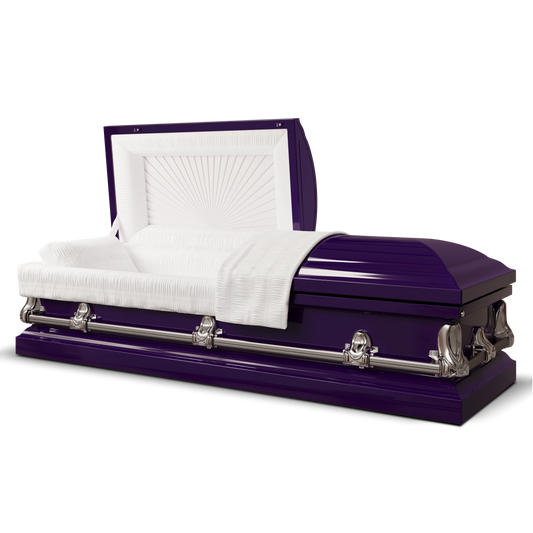
Orion Series (Made in USA)
Regular price $1,599Regular priceUnit price per
Conclusion
Almost everything about the day survives. The readings, the choir, the eulogy, the names of the men who carried him and the police headcounts along the route were all written down at the time and are still easy to find. The casket was not. He was buried in a family plot in Brooklyn, within ten miles of the ballpark where he had played, and the stone over him says nothing about baseball at all.
What Rachel Robinson arranged in those three days was not a private goodbye that happened to become public. It was built to be shared, from the days of viewing to a route chosen so that whole neighbourhoods could stand in the street and watch him go past. Burt Reynolds was sent off in front of very few people and Mike Ditka was another sporting figure whose family kept the details to themselves, and that is the more usual way a famous life ends. Robinson's ending was the loud one, and it was one woman's decision that it should be.
Sources
- National Park Service, Jackie Robinson biography
- Public Law 108-101, United States Congress, 29 October 2003, via govinfo.gov
- The American Presidency Project, Statement on the Death of Jackie Robinson, 24 October 1972
- Ronald Reagan Presidential Library, Presidential Medal of Freedom ceremony remarks, 26 March 1984
- Society for American Baseball Research, Jackie Robinson biography by Rick Swaine
- Sports Illustrated, The Long Autumn of Jackie Robinson, excerpted from Kostya Kennedy, True: The Four Seasons of Jackie Robinson
- Associated Press, Hal Bock, Breaking the Color Barrier: the Jackie Robinson Legacy, carried by the Roanoke Times, 6 April 1997
- Associated Press, Ronald Blum, Jackie Robinson Museum opens after 14 years of planning, 26 July 2022
- National Baseball Hall of Fame and Museum, Remembering Jackie
- Jackie Robinson Foundation
- MLB.com, Retiring No. 42 one of baseball's greatest moments
- Brooklyn Eagle, Cypress Hills Cemetery, 5 April 2017
- Nevada Appeal front page, 24 October 1972
Image credits
- Robinson family headstone, Cypress Hills Cemetery, Brooklyn. Photograph by Tony Fischer, 25 May 2008, via Flickr. Licensed under Creative Commons Attribution 2.0 Generic, https://creativecommons.org/licenses/by/2.0/deed.en