

Introduction
About four years before anybody needed them, Jim Henson sat down and wrote his family a set of instructions for his own funeral. He said it felt odd to be planning the thing while he was still perfectly well. When the letters were opened in May 1990 they turned out to ask for something very particular. No black clothes. Happy songs and happy words. A nice, friendly little service, as he put it, with a rousing soundtrack.
He died at 53, far more suddenly than anyone around him expected, of an infection that moved faster than the antibiotics could. The two services that followed, one in New York and one in London, were shaped almost entirely by what he had written down. Neither of them had a casket in the room, and no resting place has ever been made public.

The Life and Legacy of Jim Henson
Henson was born in Mississippi on 24 September 1936. At seventeen he answered an advertisement for puppeteers at a Washington television station, and in 1955 he and Jane Nebel began Sam and Friends on WRC-TV, a five minute nightly programme that introduced a character called Kermit and won Henson an Emmy in 1958. He graduated from the University of Maryland in 1960. Five years later a short film he wrote, directed and starred in, Time Piece, was nominated for an Academy Award.
Sesame Street began in 1969 with his characters at the centre of it. The Muppet Show followed in 1976 and reached an estimated 235 million viewers in more than a hundred countries, winning three Emmys across its five year run. Out of it came The Muppet Movie, The Great Muppet Caper and The Muppets Take Manhattan, and alongside it he built Fraggle Rock, The Dark Crystal and Labyrinth. The Witches, released in 1990, was among the last things he worked on.
Let Titan Concierge help you plan with clarity, care, and confidence.
The News of Jim Henson's Passing
Henson died early on Wednesday 16 May 1990 at New York Hospital in Manhattan. He was 53. Hospital spokesmen described the cause as a massive bacterial infection, more specifically streptococcus pneumonia, which had brought on failure across several organs. His kidneys and his heart gave out, his blood stopped clotting properly and he went into shock, and by the end antibiotics could no longer turn any of it around.
He had been taken to the emergency room less than twenty four hours before he died. An autopsy indicated the infection had been spreading through his body for at least three days. Arthur Novell, a spokesman for Jim Henson Productions, said he had waited too long to seek treatment. The Los Angeles Times carried that account the following morning.
The Funeral Arrangements for Jim Henson
There was no funeral. What there was instead were two memorial services, and the letters Henson had written about four years earlier, opened after his death, decided the shape of both. He had asked for happy songs and happy words, and he had asked that nobody wear black. Alan Rickman also planned his own service, and Muhammad Ali set out in advance how he wanted his to run.
The first service was at the Cathedral of St. John the Divine in New York, on the Monday after he died. A Dixieland band played. Thousands of people took part, in a building that seats five thousand. The second came about six weeks later, at St Paul's Cathedral in London on 2 July 1990, a city where he had kept a house since 1979 and where The Muppet Show had made him a household name. More than 1,400 people were there, in a cathedral decorated with greenery.
The Casket Details of Jim Henson
There was no casket at either service. Nothing about a burial, a cremation, an urn or any other container has ever been made public, and more than three decades later it still has not been. Nothing about the casket was ever released for Wilt Chamberlain or Jackie Robinson either.
A casket becomes a matter of public record for fairly mundane reasons. A family holds a viewing and reporters describe what they see, or a hearse travels a published route, or an estate files a bill, and that is how the casket types chosen by well known people tend to come to light at all. None of it happened here, so whether his family chose a casket, a coffin or a cremation urn is something they kept to themselves. Michael Landon and Lucille Ball were both cremated with nothing about the container ever described.
Attendees and Eulogies
Harry Belafonte sang at the New York service, performing "Turn the World Around" with three backup singers. He had written the song, and Henson had used it on The Muppet Show. Caroll Spinney came out as Big Bird and sang "It's Not Easy Being Green", which was Kermit's song rather than Big Bird's, and afterwards thanked Kermit for lending it to him. The Deseret News reported both performances the next day.
The programme handed out that day carried words of Henson's own. He asked the people reading it to watch out for each other, to love and forgive everybody, and told them it was a good life and they should enjoy it. The words came from the man himself rather than from anyone standing at a lectern. Bea Arthur and Mary Tyler Moore were two more television figures whose farewells were arranged by the people closest to their work.
The Impact on Fans and the Industry
Writing in the Christian Science Monitor the week after the death, Alan Bunce said Henson had turned puppetry into a mass-media art form and then sustained it for more than three decades, and that the Muppets had shaped the childhoods of two generations. Joan Ganz Cooney, who created Sesame Street, took the view that the programme would not exist in anything like its present form without them.
Henson had once asked whether anyone could imagine an America without Kermit, and answered himself by saying that children certainly could not, and that the frog was part of the country's puppet heritage. A great deal of the grief in May 1990 came from people who had first met his characters as small children and were adults by the time he died, which is what Bunce was getting at about two generations. Eddie Van Halen and George Harrison drew the same kind of mourning from audiences who had grown up on their work.
Legacy and Remembering Jim Henson
The clearest marker is at the University of Maryland, where he graduated. A bronze statue by Jay Hall Carpenter shows Kermit sitting on a red granite bench beside Henson, 450 pounds of it, and it was dedicated on 24 September 2003, which would have been his birthday. The classes of 1994, 1998 and 1999 paid for it, and the memorial garden planted around it, with its roses and crape myrtles, is a popular spot for photographs.
In August 2010 Jane Henson gave ten of the original Sam and Friends characters, the first Kermit among them, to the Smithsonian's National Museum of American History, which had been showing a Kermit on loan since 1979. In 2021 English Heritage fixed a blue plaque to 50 Downshire Hill in Hampstead, the house he had bought in 1979, reading simply that the creator of the Muppets lived here. The Jim Henson Legacy, set up by his family and colleagues, preserves his work in puppetry, television and film.
-
Catima's Choice
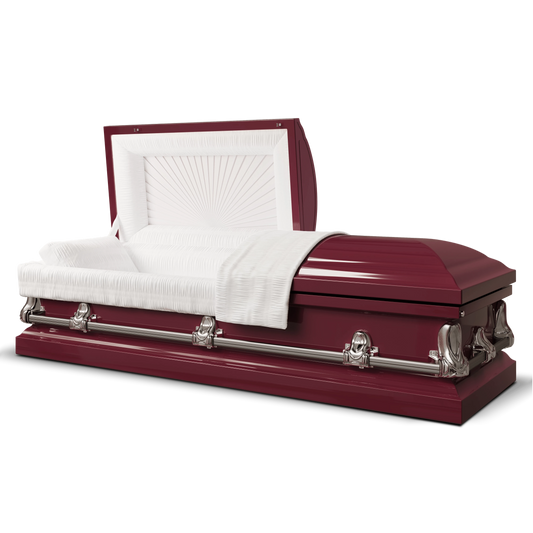
Orion Series (Made in USA)
Regular price $1,599Regular priceUnit price per -
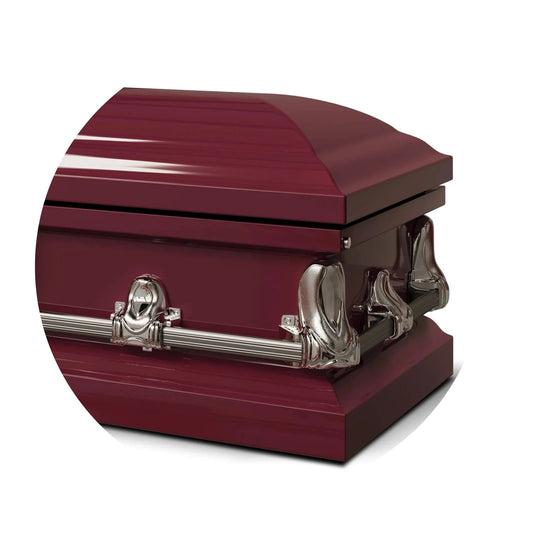
Orion Series (Made in USA)
Regular price $1,599Regular priceUnit price per -
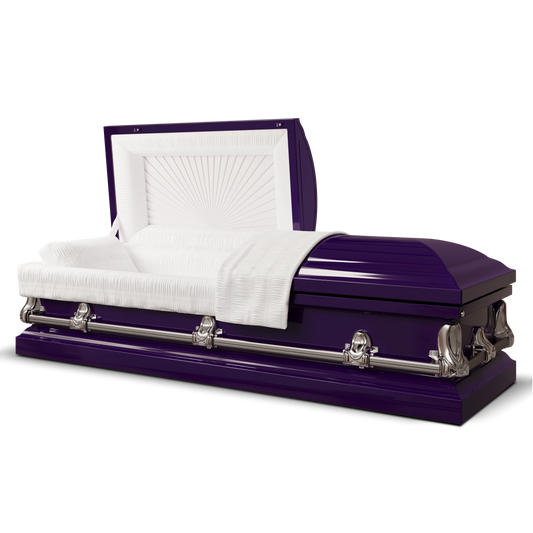
Orion Series (Made in USA)
Regular price $1,599Regular priceUnit price per
Conclusion
Jim Henson wrote out how he wanted to be mourned and his family did as he asked. No black, a Dixieland band, Harry Belafonte singing a song Henson had used on his own show, Big Bird singing a frog's song, and a programme in which the dead man told everybody to enjoy themselves. The parts he did not write about, the casket and the burial and the grave, are the parts nobody has ever learned anything about.
He settled his four years ahead of needing it, in a letter he found strange to be writing at the time. Elizabeth Taylor left written instructions as well, and Luke Perry had chosen in advance how he wanted to be buried. What the three of them did has a plainer name now, casket pre-planning, and sits inside the wider business of funeral planning.
Sources
- Los Angeles Times, "Muppet father Jim Henson dies; neglected pneumonia called cause of death", 17 May 1990, via the Roanoke Times archive
- Deseret News, "Admirers bid farewell to Jim Henson", 22 May 1990
- Tampa Bay Times archive, "Henson remembered in London memorial service", 3 July 1990
- Christian Science Monitor, Alan Bunce, "Mr. Muppet", 23 May 1990
- English Heritage, Jim Henson blue plaque, 50 Downshire Hill, London
- University of Maryland Arboretum and Botanical Garden, Jim Henson Statue and Memorial Garden
- Smithsonian Institution, "Kermit the Frog comes home to Washington", 25 August 2010
- The Jim Henson Legacy, Jim Henson biography
- Encyclopaedia Britannica, Jim Henson
Image credits
Jim Henson at the 41st Primetime Emmy Awards, 17 September 1989. Photograph by Alan Light, via Flickr, licensed under Creative Commons Attribution 2.0 Generic (CC BY 2.0), https://creativecommons.org/licenses/by/2.0/deed.en