
![Upgrade to Premium Weight [18-gauge steel]](http://titancasket.com/cdn/shop/products/casketthicknesswithnumbers.png?v=1680642906&width=533)
Short answer: Most families spend $1,000 to $5,000 on a grave marker. A flat bronze or granite marker runs roughly $1,000 to $2,500; an upright granite headstone $2,000 to $5,000; a companion monument $4,000 to $8,000. Add a cemetery setting fee of $300 to $1,000. Before buying anything, get the cemetery's written rules. They dictate material, size, colour and shape, and a marker that breaks them will be rejected.
How Much Does a Gravestone Cost?
| Type of marker | Typical cost | Notes |
|---|---|---|
| Flat grass marker (bronze on granite) | $1,000 to $2,500 | Required by many modern lawn cemeteries |
| Flat granite marker | $800 to $2,000 | The most economical permanent option |
| Upright granite headstone | $2,000 to $5,000 | Price rises with size, colour and carving detail |
| Companion / double monument | $4,000 to $8,000 | Covers two plots, often bought pre-need |
| Custom or sculpted monument | $10,000+ | Hand-carved work, imported stone, statuary |
| Cemetery setting fee | $300 to $1,000 | Charged separately, usually payable before delivery |
Prices vary by region and by stone. Black and red granite cost more than grey. Bronze has risen sharply with metal prices. Always get the setting fee in writing from the cemetery before you commit to a marker, because it is charged whether you buy from the cemetery or elsewhere.
Gravestone, Headstone or Tombstone?
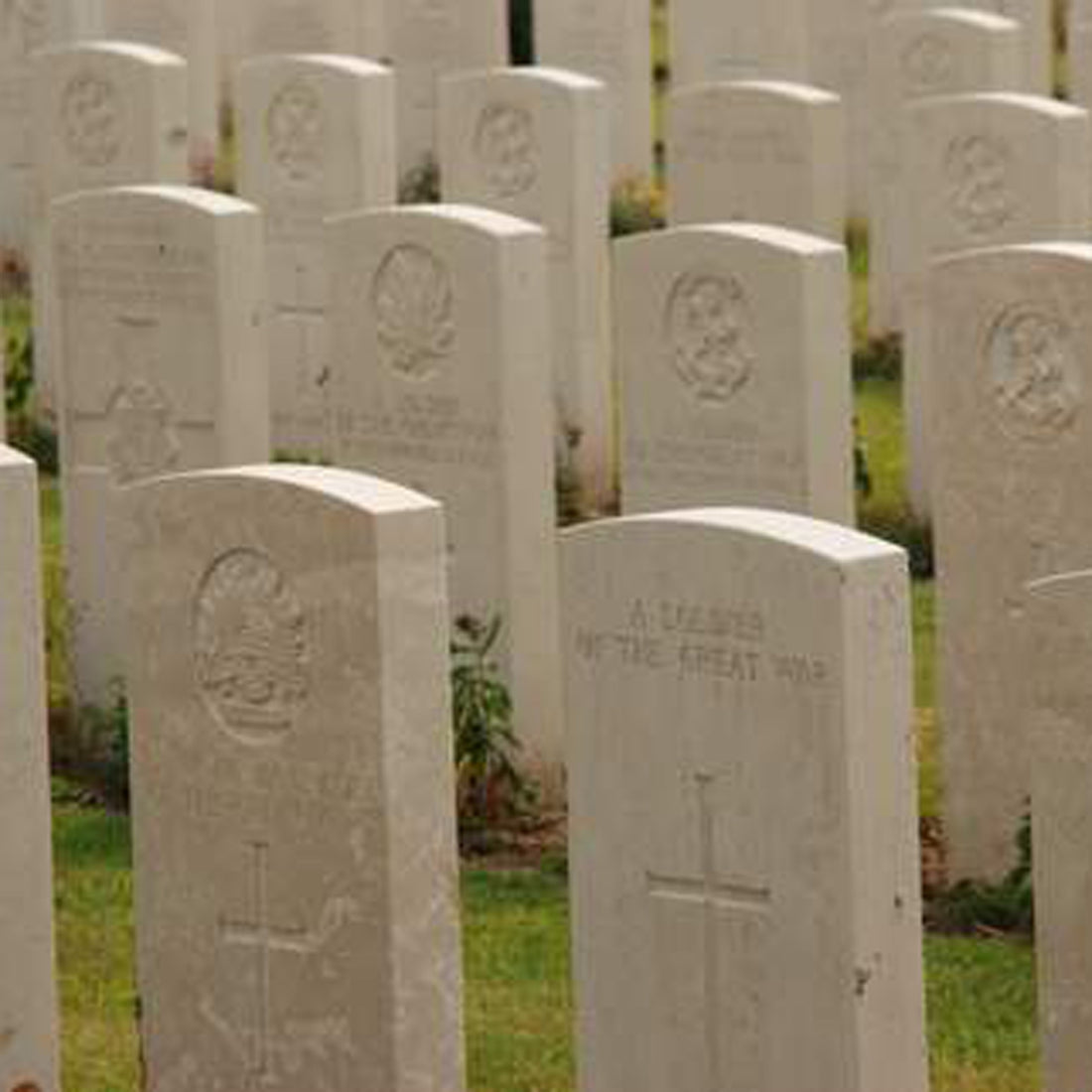
The three words are used interchangeably today, but they began as different things. A gravestone or tombstone is the general term for a burial monument. It can be a headstone, statue or plaque. A headstone is specifically a block of stone placed at the head of a grave, inscribed with details of the person buried there.
Historically a tombstone referred to the lid of a stone coffin, or the coffin itself, while a gravestone was the stone laid over a grave. Monument retailers will understand all three terms to mean the same product.
-
Marines
Veteran Select (Made in USA)
Regular price $2,499Regular priceUnit price per -
Atlas XL (Made in USA)
Regular price From $1,999Regular priceUnit price per -
Josh's Choice
Major XL (Poplar) (26" - 35") (Made in USA)
Regular price From $2,499Regular priceUnit price per



Check the Cemetery's Rules First
This is the step families most often skip, and it is the one that causes rejected orders. The FTC Funeral Rule requires itemised price information on funeral goods and services, and prohibits misrepresenting legal cemetery requirements. Ask for the cemetery's rules in writing and confirm:
- Permitted material. Many cemeteries allow only granite or bronze. Marble and limestone weather badly and are often excluded.
- Colour restrictions. Some cemeteries permit only specific granite colours.
- Size limits, which depend on whether the plot is single, companion, youth or cremation.
- Adornments. Whether porcelain, laser-etched or coloured photographs are allowed.
- Required symbols or engravings, common in religious cemeteries, and rules on where engraving may sit.
- Edge and border requirements, such as a specific bevel or a lawnmower-proof border.
- Installation. Whether the cemetery installs it or you must hire a third party.
- Setting fees and paperwork. Authorisation, release and setting forms usually have to be filed before delivery.
Where to Buy a Grave Marker
There are three routes: the cemetery itself, a funeral home, or a monument retailer. Monument retailers generally offer the widest selection and know local cemetery regulations, which reduces the risk of ordering something that will be refused. Cemeteries sometimes charge a premium but handle installation directly.
Buying online is viable, and often cheaper, provided the retailer is reputable. Ask for a computer rendering of the finished marker before you approve it, confirm the stone grade in writing, and check who is responsible if the cemetery rejects the piece.
Note that Titan Casket supplies caskets, coffins and urns. We do not sell headstones. For grave markers, the Monument Builders of North America maintains a directory of accredited memorial retailers.
Choosing Material and Design
Granite is the default choice for good reason: it resists weathering, needs little maintenance and holds detailed carving. Bronze markers, usually mounted on a granite base, suit lawn cemeteries and age to a stable patina. Marble and limestone look beautiful but erode, and inscriptions can become unreadable within a few decades.
Accessories add cost: built-in vases, photographic insets, statuary, wreath and flag holders, and solar lights. Decide on these before pricing, since retrofitting is expensive.
Markers can be designed and bought before death, and many people do this as part of pre-planning. It removes a difficult decision from grieving relatives and locks in today's price.
Plan Your Farewell with Grace – Our Pre-Planned Caskets Offer Peace of Mind
Symbols and Religious Traditions
Grave markers are traditional across Christianity, Judaism and Islam, and each has its own conventions.
Christian symbols
Common inscriptions include RIP, from the Latin requiescat in pace; the anchor, an early Christian symbol of hope and, for sailors, a life at sea, with broken chains signifying a life ended prematurely; IHS, the first three letters of Jesus in Greek; clasping hands, a Victorian farewell motif also used for marriage or eternal unity; the wreath, borrowed from the Greeks as a symbol of victorious redemption; and the broken column, denoting an early death. Photographic insets are common in European tradition.
Jewish tradition
A headstone marks the gravesite so it can be visited, or avoided, since kohanim are required to avoid contact with the dead. Custom is to hold an unveiling ceremony after the Kaddish period, thirty days for close relatives or eleven months for a parent, and within a year of death.
Jewish tradition places few limits on the monument itself, though individual cemeteries may. Markers often feature the Star of David or a menorah, and commonly carry the Hebrew name of the deceased alongside the father's name: ben for "son of", bat for "daughter of". Two sets of dates are usual, Gregorian and Hebrew.
Islamic tradition
Orthodox Islamic practice generally discourages elaborate markers, on the basis that an adorned grave brings no benefit to the deceased. Many families prefer to donate the equivalent sum to charity. Decoration and construction on the grave are widely viewed as prohibited, and some consider inscriptions forbidden. Where a marker is used it is typically flat rather than upright, carrying only a name and dates.
Frequently Asked Questions
-
How much does a gravestone cost?
Answer: Most families spend $1,000 to $5,000. Flat markers run $800 to $2,500, upright granite headstones $2,000 to $5,000, and companion monuments $4,000 to $8,000. A cemetery setting fee of $300 to $1,000 is charged on top.
-
What is the difference between a headstone and a gravestone?
Answer: A headstone is specifically the stone placed at the head of a grave. Gravestone and tombstone are broader terms covering any burial monument. In practice all three are used interchangeably.
-
How long after burial can you place a headstone?
Answer: Most cemeteries require the ground to settle first, typically six to twelve months. Jewish tradition holds an unveiling within a year of death. Check the cemetery's own rule before ordering.
-
Can you buy a gravestone online?
Answer: Yes, and it is often cheaper than buying through the cemetery. Ask for a rendering before approving, confirm the stone grade in writing, and check the cemetery's rules first so the marker is not rejected on delivery.
-
What material lasts longest for a headstone?
Answer: Granite. It resists weathering, needs almost no maintenance and holds carved detail for generations. Marble and limestone erode and inscriptions can become unreadable within decades.