

![Upgrade to Premium Weight [18-gauge steel]](http://titancasket.com/cdn/shop/products/casketthicknesswithnumbers.png?v=1680642906&width=533)

Short answer: Most funerals are held within one week of death, and typically on days three to seven. Religious tradition can shorten that considerably - Jewish funerals are usually within 24 hours, and Islamic burials as soon as practically possible. A memorial service, where the body is not present, can be held at any time, and families often hold one weeks or months after a private funeral.
Typical Timelines After Death
| Tradition or circumstance | Usual timing | Notes |
|---|---|---|
| General US practice | 3 - 7 days | Allows for travel, paperwork and preparation |
| Jewish | Within 24 hours | Body not embalmed; private family ceremony. Modern exceptions for travel |
| Islamic | As soon as possible | Usually within 24 hours; burial rather than cremation |
| Hindu | Within 24 hours | Cremation is standard practice |
| Catholic | 2 - 7 days | Vigil, funeral Mass and committal, often across consecutive days |
| Cremation with service | 1 - 2 weeks | Service can precede or follow the cremation |
| Memorial service | No limit | Body not present, so timing is entirely flexible |
| Death under investigation | 2 weeks or longer | Body released only once the coroner or medical examiner permits |
How Long After Someone Dies Is the Funeral?
Because the body lies in repose in a coffin or casket during the service, a funeral typically happens within a week of death. The precise timing depends on how far mourners must travel, how quickly the death certificate and permits are issued, and how long the arrangements take to finalise.
Funerals can be held in a funeral home, a house of worship, at home, or at the graveside. Unless the person pre-planned the service or made their wishes clear, it falls to the next of kin to decide whether the wake and funeral include an open or closed casket.
What Delays a Funeral
- Waiting on the death certificate. Burial and cremation permits depend on it, and issuance can take several days.
- A coroner or medical examiner investigation. Where the death is sudden, unexplained or being investigated, the body is not released until the examination concludes - often two weeks or more.
- Travel. Family arriving from overseas commonly pushes a service into the second week.
- Repatriation. Transporting a body between states or countries adds documentation and time.
- Venue and clergy availability, particularly around holidays.
- Cost. Some families delay to arrange funding, which is one reason funeral costs are worth understanding early.
-
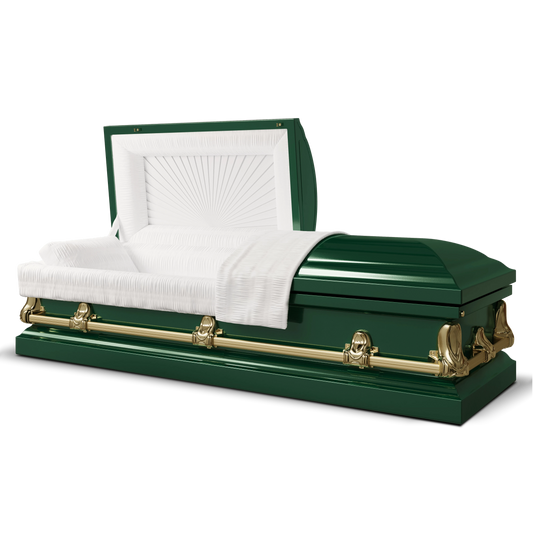
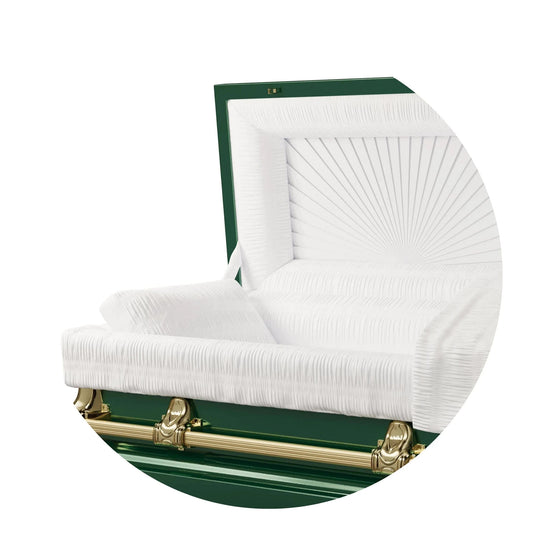
Orion Series (Made in USA)
Regular price $1,599Regular priceUnit price per -
Catima's Choice
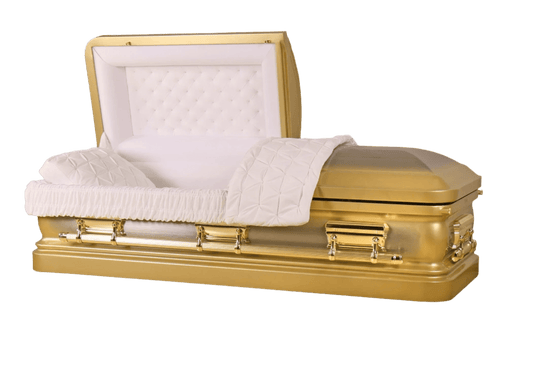
Orion Series (Made in USA)
Regular price $1,599Regular priceUnit price per -
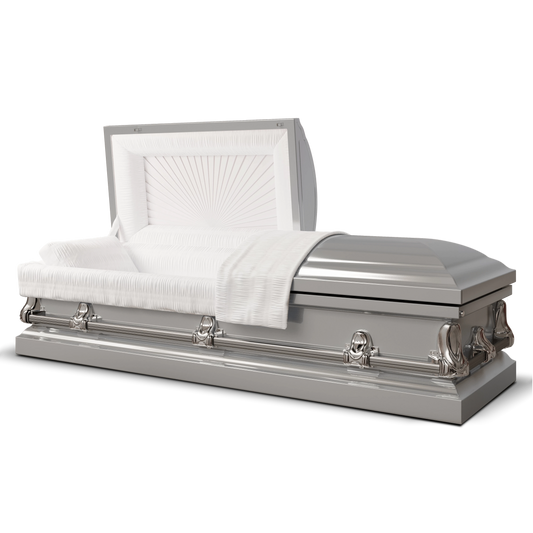
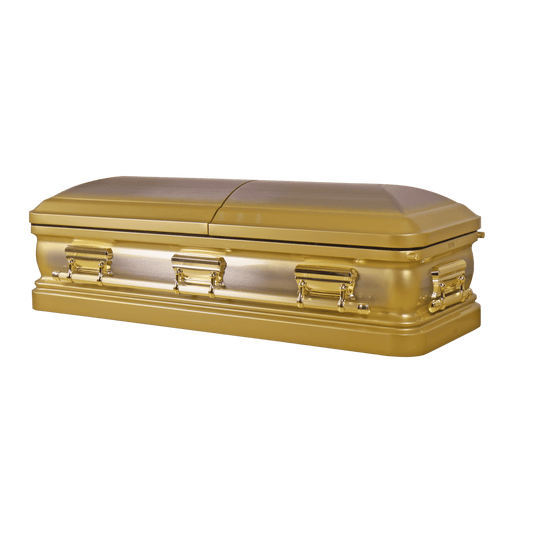
Adams Series
Regular price $2,499Regular priceUnit price per
How Long After Death Is a Memorial Service?
Funeral and memorial are often used interchangeably, and both serve to pay respects. The distinction is that the body is not present at a memorial service, which removes any time constraint - it can be held anywhere, at any point after the death.
Families frequently hold both: a private funeral shortly after the death, followed by a public celebration of life weeks, months or even a year later. That arrangement gives immediate family privacy while still allowing a wider community to gather.
Can You Hold a Funeral If You Choose Cremation?
Yes. Choosing cremation does not rule out a funeral. Families can hold a wake, viewing or full funeral ceremony before the cremation, with the body present in a casket. Alternatively the cremation happens first and the service follows, which removes time pressure entirely. Our guide to how cremation works covers the process in detail.
Can You Hold a Funeral at Home?
Yes. Family-directed or do-it-yourself funerals have grown steadily, as families choose simpler, less expensive services that more closely reflect the person who died. Every element - the music, readings, flowers - can be chosen by the family, and the experience is often described as a more intimate way of accompanying someone on their final journey.
It may also mean the family cares for the body themselves before burial or cremation. This is less common in American practice, but there can be real therapeutic benefit, and many families describe it as an extension of the care they gave in life.
All US states permit at-home body care before burial or cremation, and at-home family-directed funerals. The Funeral Consumers Alliance and the National Home Funeral Alliance publish guides to each state's legal requirements. Alongside cooling and washing the body, legal steps such as obtaining a death certificate need completing quickly.
You will also need a casket or coffin that meets your state's requirements for burial, or one suitable for cremation. Buying directly from a retailer such as Titan Casket generally costs considerably less than buying through a funeral home, and funeral homes are required by federal law to accept a casket you have supplied yourself.
Let Titan Concierge help you plan with clarity, care, and confidence.
Frequently Asked Questions
-
How long after death is a funeral usually held?
Answer: Usually within one week, most commonly on days three to seven. Religious tradition can shorten this - Jewish and Islamic funerals typically take place within 24 hours.
-
Is there a legal time limit for holding a funeral?
Answer: No federal law sets a deadline, but a burial or cremation permit is required, and that depends on the death certificate. Where a body is not embalmed or refrigerated, practical limits apply within a few days.
-
Why do some funerals take two weeks or more?
Answer: The most common causes are a coroner investigation delaying release of the body, waiting on documentation, repatriation from another state or country, or family travelling internationally.
-
How long after death is a Jewish funeral?
Answer: Within 24 hours wherever possible. The body is traditionally not embalmed and the ceremony is private to the family. Modern exceptions exist where relatives must travel.
-
Can a memorial service be held months after death?
Answer: Yes. Because the body is not present, a memorial service has no time constraint. Many families hold one on the first anniversary or at a date that suits distant relatives.