

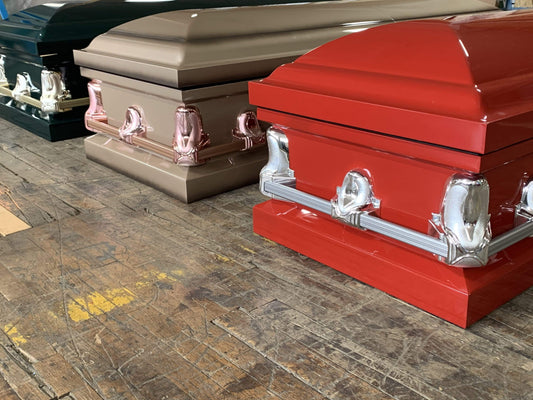

A DIY funeral is a funeral or memorial service that the family plans and runs itself instead of hiring a funeral home to do it all. In most U.S. states that is legal. You can hold the service at home, at a park or at the graveside, care for your loved one's body yourselves for a short time, and buy a casket directly from a seller rather than through a funeral home. What you cannot skip is the paperwork: a death certificate, a burial or cremation permit, and a cemetery or crematorium that will accept the body.
DIY funerals are popular for three reasons: cost, control and time. A conventional funeral with viewing and burial often costs more than $8,000, and a family that handles the service itself can cut a large share of that. It also lets you choose the place, the readings and the music, and sit with your loved one without a clock running. This guide covers what to arrange, in what order, and where the legal limits are.
Is A DIY Funeral Legal?
In most states, yes. Families are allowed to take charge of a death without a funeral director, which is often called a home funeral. A handful of states, including New York, New Jersey, Louisiana, Michigan, Nebraska, Indiana and Connecticut, require a licensed funeral director to be involved at some stage, for example to file paperwork or supervise the burial. Rules change, so check with your state funeral board before you commit, and ask the county health department about the death certificate and the burial-transit permit.
Two other rules help DIY families. Under the FTC's Funeral Rule, a funeral home must accept a casket you bought elsewhere and cannot charge a handling fee for it. And you will need certified copies of the death certificate for almost everything that follows, so read our guide to getting a death certificate early.
Choosing A Location For A DIY Memorial Service
At home. Most families choose a residence. It costs nothing, it is familiar, and a memorial service at home can be as formal or as informal as you like.
Outside the home. A park, a garden, a place of worship, a hall or a favorite outdoor spot all work. Contact the owner of the space well in advance, because they will tell you whether funeral services are allowed, how many people can attend, how parking works and what vendor rules apply. Expect to sign a contract.
Transportation. Check your state's laws on moving a body yourself. If private transport is legal, you need a vehicle that can carry a person and the casket or container safely. If not, ask a local funeral home or independent transport service what they offer.
Veteran Select (Made in USA)
Sale price
$2,499
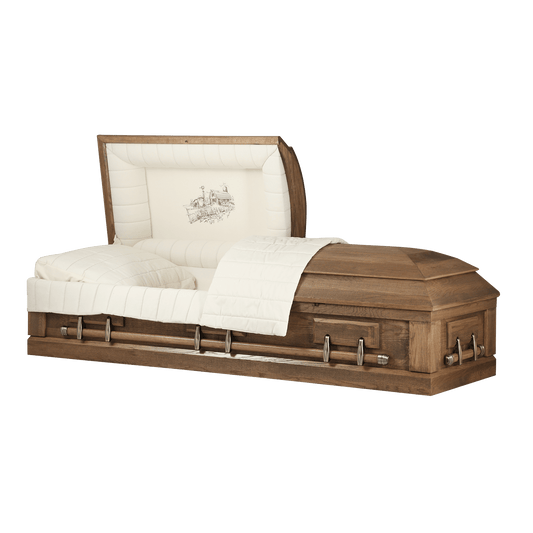
Rustic (Solid Oak) (Made in USA)
$2,499.00 USD
Sale price
$2,999
Atlas XL (Made in USA)
Sale price
From $1,999




Planning The Funeral Service At Home
Caring for the body. Many families wash and dress their loved one themselves. It can be a meaningful ritual, and it is usually lawful for a short period, although how long varies by state. Our guide to preparing a body for burial at home covers cooling, handling and timing.
A casket or container. Families increasingly buy a casket online instead of through a funeral home, and the Funeral Rule protects that choice. Titan Casket makes caskets and coffins, including custom builds and caskets suitable for cremation. Titan does not sell urns, so if you are choosing cremation you will need to source an urn separately.
A crematorium, if you choose cremation. Look for an independent crematorium that will work directly with the family. In most states the body can stay at home until it is transported for cremation. See how much cremation costs before you call around.
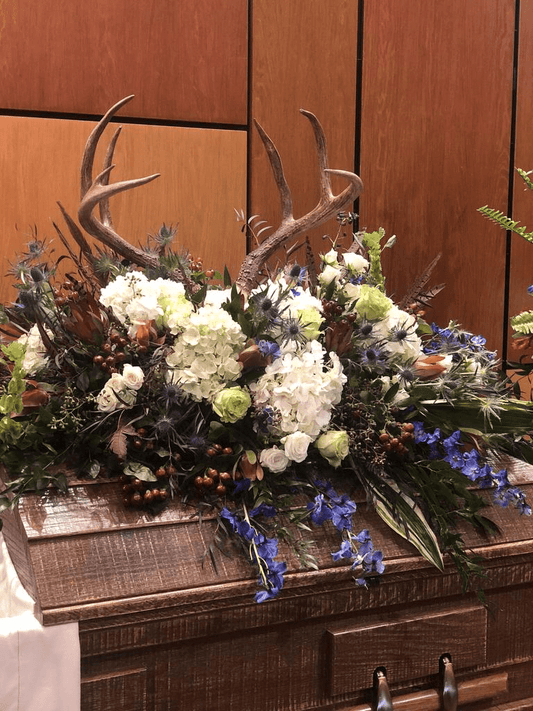
Flowers. Ask local florists what is in season, or cut flowers and branches yourself. Grocery stores and online sellers are often cheaper than a florist, and silk arrangements last longer and cost less than fresh ones. A few boldly colored blooms against greenery look fuller than a small mixed bouquet. For more ideas, see our celebration of life ideas.
Who leads the service. Anyone can officiate a funeral or memorial. Friends and relatives often take turns reading poems, playing music and sharing memories. A religious leader may agree to take part if you ask, and some families hire an end-of-life doula, also called a death doula or home funeral guide, to coach them through the days after a death. The Home Funeral Alliance keeps a directory of home funeral guides and doulas you can search by location.
If the logistics feel heavy, free funeral planning help can take on the phone calls and paperwork while you keep control of the service. Titan Concierge offers free funeral planning guidance with no obligation, whether you want a full DIY funeral or just a second opinion on one step.
How To Plan A Do It Yourself Graveside Service
A do it yourself graveside service is one of the simplest DIY options because the cemetery already provides the setting. A typical order of events runs 20 to 30 minutes: a welcome, a reading or prayer, a eulogy or a few shared memories, a moment of silence or a favorite song, the committal, and a closing word from whoever is leading.
Before the day, confirm four things with the cemetery: that they allow a family-led service, what time slot and how long you have, whether they require a burial vault or grave liner (many do), and what their opening and closing fees are. Ask who sets up chairs and a tent, and whether you can bring a speaker or live music. Our full guide to planning a graveside service walks through the order of service in more detail.
Planning The Burial Or Cremation
Cemetery burial or cremation. Both are available with or without a funeral home. What you can do yourself depends on your state and on the local cemetery or crematorium, so call them first. If you are choosing between a natural burial and embalming, see our explanation of embalming vs natural burial.
Home burial. Burial on private land is allowed in some states and restricted or banned in others, and usually depends on local zoning, depth requirements and distance from water. Confirm the rules with the county before you plan anything. A home grave must be dug to legal depth, which is a serious equipment job.
Grave markers. If you are arranging the burial yourself you will also need a headstone or other marker. Our guide on how to buy a gravestone explains what to look for.
Benefits Of A DIY Funeral Service
Cost savings. Doing more of the work yourself, such as the service, flowers and transport, usually costs less than a full-service funeral home package.
Control. You decide the place, the timing, the vendors and the ceremony, and you can hand tasks to friends and family instead of paying for each one.
Time. If your loved one stays at home, family and friends can sit with them for hours or days, depending on your state's rules, and say goodbye without a schedule.
Let Titan Concierge help you plan with clarity, care, and confidence.
Not sure where to start? A funeral concierge can walk you through permits, vendors and budgets so the service itself stays in your hands. Titan Concierge offers funeral concierge services built around your budget and priorities, so you can put your energy into honoring your loved one.