![Upgrade to Premium Weight [18-gauge steel]](http://titancasket.com/cdn/shop/products/casketthicknesswithnumbers.png?v=1680642906&width=533)

A green burial is a burial that returns the body to the earth as directly as possible: no embalming chemicals, no concrete vault, and a fully biodegradable casket, coffin or shroud. It is one of the oldest ways of burying the dead and, in the United States, one of the fastest growing. A green burial is usually simpler and often cheaper than a conventional embalmed burial, though the cemetery plot itself can cost more.
This guide covers what a green burial involves, what it costs, how to find a green cemetery near you, and how the whole thing compares with the traditional embalmed burial most American funeral homes still default to.
What Is A Green Burial?
A green burial, also called a natural burial, places an unembalmed body directly into the ground in a container that will break down completely. The purpose is to let decomposition happen naturally and to keep manufactured materials out of the ground.
In practice a natural burial means three things are left out:
- No embalming. The body is not treated with preservative chemicals. Refrigeration or dry ice is used instead if there is a delay before burial.
- No concrete vault or grave liner. The casket goes straight into the earth.
- No non-biodegradable materials. The body is placed in an eco friendly casket, coffin or shroud made from natural materials.
Green burial is often described as a modern trend, and the recent growth in demand is real. But the practice itself is ancient, and it remains the norm in Jewish and Muslim burial traditions, both of which have always required prompt burial without embalming in a plain wooden container.
What Is A Natural Burial Casket?
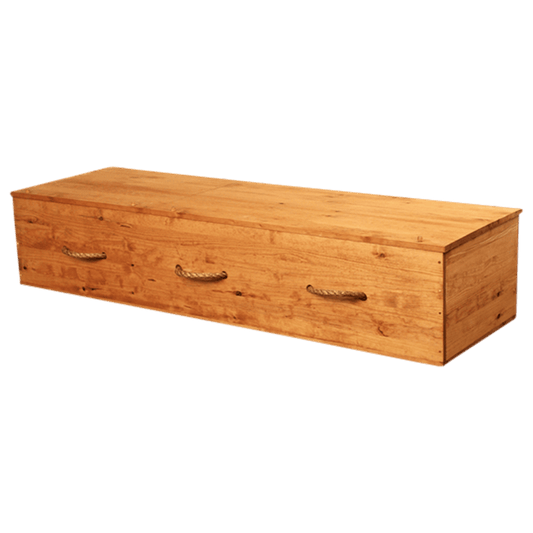
A natural burial casket is a casket or coffin built entirely from materials that decompose, typically pine, bamboo or willow, with no metal fittings, no synthetic linings and no sealed gaskets. Natural burial caskets are plain by design, and they are perfectly suitable for a viewing or a funeral service before the burial itself.
Because there is no grave liner, these caskets begin breaking down in the soil rather than sitting in a sealed concrete box. What is available generally falls into three groups:
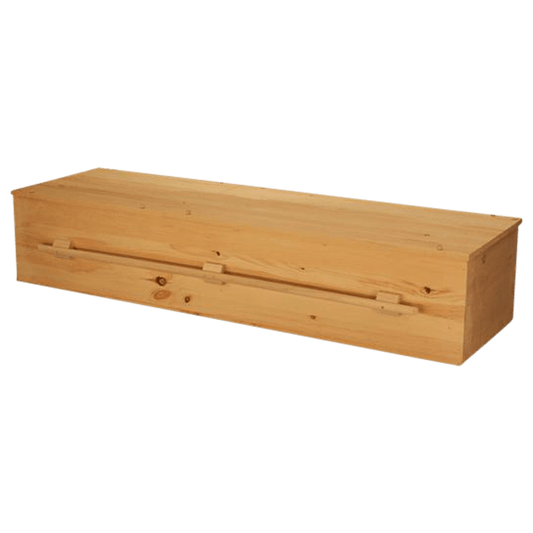
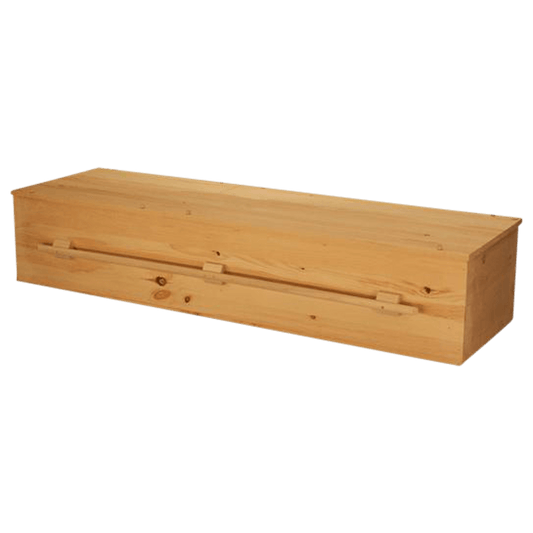
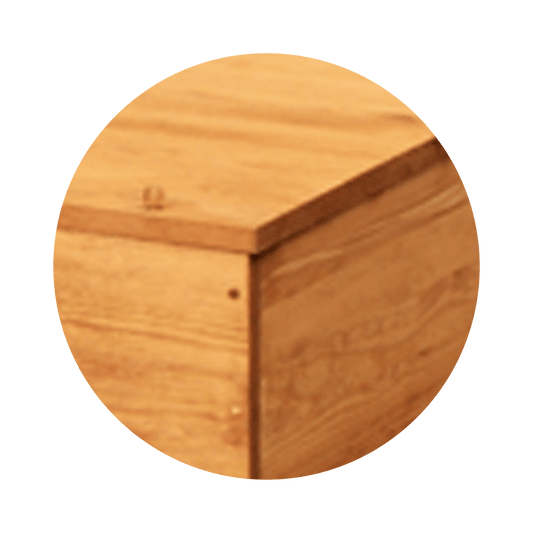
- Pine caskets. The most common and the least expensive option. Titan's Eco Pine Box I and Eco Pine Box II are built with no metal parts at all and are priced at $1,199 as of August 2026. The same metal-free construction that makes them suitable for green burial also makes them suitable for Jewish burial and for cremation.
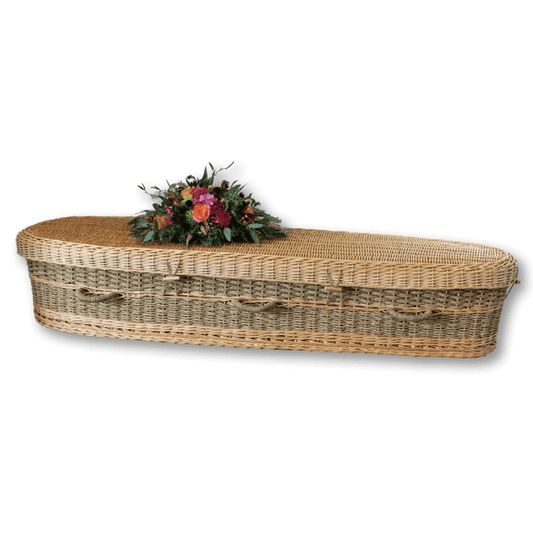
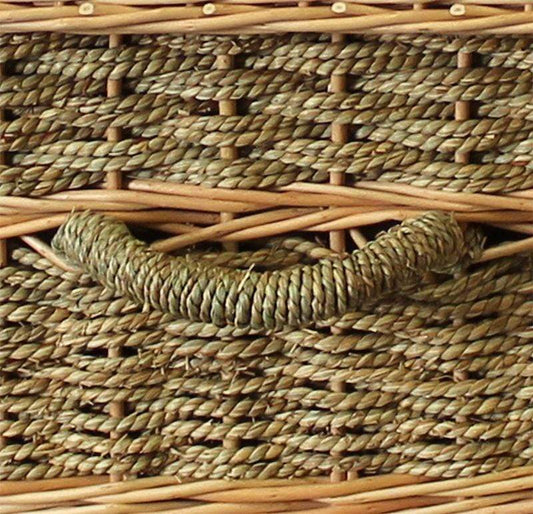
- Woven caskets. Bamboo, willow or seagrass, woven rather than joined. Titan's bamboo wicker casket is $2,399.
- Shrouds. A simple cloth wrapping in wool, cotton, linen or hemp, sometimes carried on a wooden board. The simplest and cheapest option of all.
Cardboard caskets are also accepted at most green cemeteries. What is not accepted, almost anywhere, is a metal casket, a sealed casket or anything with a synthetic interior.
Why Choose A Green Burial?
- Religious observance. Jewish and Muslim burial customs align closely with green burial requirements: prompt burial, no embalming, a plain biodegradable container.
- Environmental impact. A green burial uses far less material: no concrete, no steel, no embalming fluid. Conservation-oriented green cemeteries go further and use burial fees to fund protection of the land itself.
- Simplicity. For many families the appeal is that there is less to decide, less to buy and less ceremony around the container.
- Cost. Removing embalming, the vault and an elaborate casket takes several of the largest line items off a funeral bill.
People often ask how long a body takes to decompose in a green burial. Without embalming or a vault, soft tissue breaks down considerably faster than in a conventional burial, but full skeletal reduction takes years and varies enormously with soil type, depth, temperature, oxygen and moisture. Anyone quoting you a single precise figure is guessing.
Titan Seagrass
Sale price
From $2,399
Eco I Pine Box (Made in USA)
Sale price
$1,199
Eco II Pine Box (Made in USA)
Sale price
$1,199
How To Find A Green Cemetery Near You
The first modern green cemetery in the United States, Ramsey Creek Preserve in South Carolina, opened in 1998. Since then the number has grown steadily, and a great many conventional cemeteries have also opened dedicated natural burial sections rather than converting entirely.
The most reliable way to find one is the Green Burial Council, the main certifying body in North America. The GBC maintains a live provider map and certifies cemeteries in three tiers, which is worth understanding before you visit one, because the label "green" covers a wide range:
- Hybrid cemetery. A conventional cemetery with a green section. Vaults are not required and containers must be biodegradable, but the wider grounds are managed conventionally.
- Natural burial ground. Dedicated to natural burial throughout, with ecological land-management requirements on top of the container and vault rules.
- Conservation burial ground. The most stringent tier. Burial is tied to legally protected land conservation, usually through an easement held by a separate conservation organisation.
The New Hampshire Funeral Resources, Education & Advocacy group also maintains a state-by-state list of green cemeteries.
Green cemeteries typically restrict more than just the casket. Expect limits on grave markers (often a flat natural stone or a GPS record instead of a headstone) and on what can be left at the graveside, since balloons, artificial flowers and imported memorabilia work against the conservation purpose. Many also prohibit pesticides, herbicides and fertiliser on the grounds. Ask for the cemetery's rules in writing before you buy a plot.
Green Burial Outside A Green Cemetery
A burial can be substantially green without a certified green cemetery. What makes it so is skipping embalming, using a biodegradable casket or shroud, and avoiding a concrete vault.
The vault is usually the sticking point, because many conventional cemeteries require one to keep the ground from settling. Ask before you buy the plot. If no nearby cemetery will waive it, two common compromises are drilling drainage holes in the base of the vault, or inverting the vault so the body is in contact with the soil beneath.
Home burial on private land is legal in most states, with conditions that vary considerably: setbacks from water sources, minimum acreage, county permits and deed recording are all common requirements. Check your state and county rules before assuming it is an option.
Working out which of these routes is actually available where you live takes some phoning around. Titan Concierge offers free funeral planning help with exactly this kind of legwork.
Green Funeral Services
More funeral directors offer green burial services every year. There is no federal standard defining what "green" means for a funeral home. The FTC Funeral Rule governs pricing disclosure and your right to buy a casket elsewhere, but it does not certify environmental claims. That absence of a legal definition is precisely why third-party certification matters when you are comparing providers.
The National Funeral Directors Association runs a Green Funeral Practices Certificate programme, and the Green Burial Council certifies funeral homes separately from cemeteries. Whichever you are dealing with, ask for the General Price List, which every funeral home is legally required to give you, and check that the green services are itemised on it.
What Does A Green Burial Cost?
A green burial removes three of the biggest costs from a conventional funeral: embalming, the concrete vault, and an expensive casket. That usually makes it cheaper overall. But it is not automatically the cheapest option, and two things catch families out.
First, plots at green cemeteries are often more expensive than conventional ones, particularly at conservation burial grounds where the fee funds land protection. Second, some funeral homes charge more for a green burial service than a traditional one, occasionally more than for a direct burial, which is a very similar service. Compare the General Price Lists of several funeral homes rather than the first one you call.
The casket is the part you have most control over. Bringing your own biodegradable casket brings the cost down further, and under the FTC Funeral Rule a funeral home must accept a casket you supply and cannot charge you a fee for handling it. Wooden caskets, pine especially, are the usual choice; Titan's metal-free pine boxes start at $1,199.
If you want the full picture before committing to anything, a funeral concierge can compare quotes across local funeral homes and cemeteries on your behalf.
What Is A Traditional Burial?
The meaning of "traditional burial" has shifted a great deal over time. Today in the United States it usually means a funeral home, a public cemetery, embalming, and burial in a casket inside a concrete vault. Very little of that arrangement is more than about 150 years old.
What Is Embalming?
Embalming pumps preservative fluid into the body to slow decomposition and improve appearance. It is used mainly when a body must be transported over a distance, when it is needed for medical or scientific purposes, or when a funeral involves an open-casket viewing.
Is Embalming Required?
Almost never. Embalming is very rarely a legal obligation, and the FTC Funeral Rule requires funeral homes to tell you so. They may not represent embalming as legally required when it is not. A small number of exceptions exist, generally involving transporting a body across state lines by particular means or after certain delays, and rules vary by state.
Despite that, embalming is close to standard practice in the United States and Canada, largely because funeral homes usually require it before a public viewing of the body.
Embalming has no religious basis. Christianity neither requires nor forbids it. Islam and Judaism both prohibit it except where the law compels it.
Nor does embalming have an established public health benefit, though morticians were once taught that it did. Embalming fluid is formaldehyde-based and hazardous enough that embalmers are required to work in protective equipment and ventilated rooms.
Why Is Embalming So Common?
The funeral industry promotes embalming primarily in the context of viewings. Many families want a viewing, and funeral homes encourage it, on the reasoning that seeing the body helps with closure. Embalming slows the visible changes after death so the person looks more as the family remembers them.
What Does Embalming Actually Do?
It delays decomposition; it does not prevent it. No embalming produces a permanent result. How long the effect lasts depends on the strength and volume of fluid used and on conditions in the grave: humidity, the burial container, and above all temperature, which is the dominant factor in the rate of decomposition whether or not a body has been embalmed.
Plan Your Farewell with Grace – Our Pre-Planned Caskets Offer Peace of Mind
Alternatives To Embalming
Embalming is a choice, not a requirement, and there are straightforward alternatives:
- Refrigeration. The most common alternative, used to hold a body while awaiting burial or cremation. Ask whether the funeral home has refrigeration on site; if not, hospitals and third-party mortuary services usually do.
- Dry ice. Used for home vigils and shorter delays, and the usual approach where a family keeps the body at home.
- Prompt burial. Burying within a day or two, as Jewish and Muslim tradition requires, removes the need for preservation altogether.
- Private viewing without embalming. Home and private viewings are commonly held with no embalming at all.
- Direct burial. The body is buried without a viewing or a preceding service. Every funeral home offers it and it must appear on the General Price List.
Green Burial: Common Questions
What is a green burial?
A burial with no embalming, no concrete vault and a fully biodegradable casket, coffin or shroud, so the body returns to the earth naturally.
Is a green burial cheaper than a traditional burial?
Usually, because it removes embalming, the vault and an expensive casket. But plots at green cemeteries often cost more than conventional plots, and some funeral homes charge a premium for green services, so compare price lists.
What kind of casket is allowed for a green burial?
Anything fully biodegradable with no metal fittings or synthetic lining: pine, bamboo, willow, seagrass, cardboard, or a cloth shroud. Metal and sealed caskets are not permitted.
Is embalming required by law?
Almost never. The FTC Funeral Rule requires funeral homes to disclose that embalming is not legally required in most circumstances. Limited exceptions apply, mainly around transporting a body across state lines, and rules vary by state.
How do I find a green cemetery near me?
Use the Green Burial Council's provider map, which lists certified hybrid, natural and conservation burial grounds. Many conventional cemeteries also have a green section, so it is worth asking local cemeteries directly.
Can I have a green burial on my own land?
In most states, yes, but conditions vary widely: setbacks from water, minimum acreage, county permits and deed recording are common. Check state and county rules first.